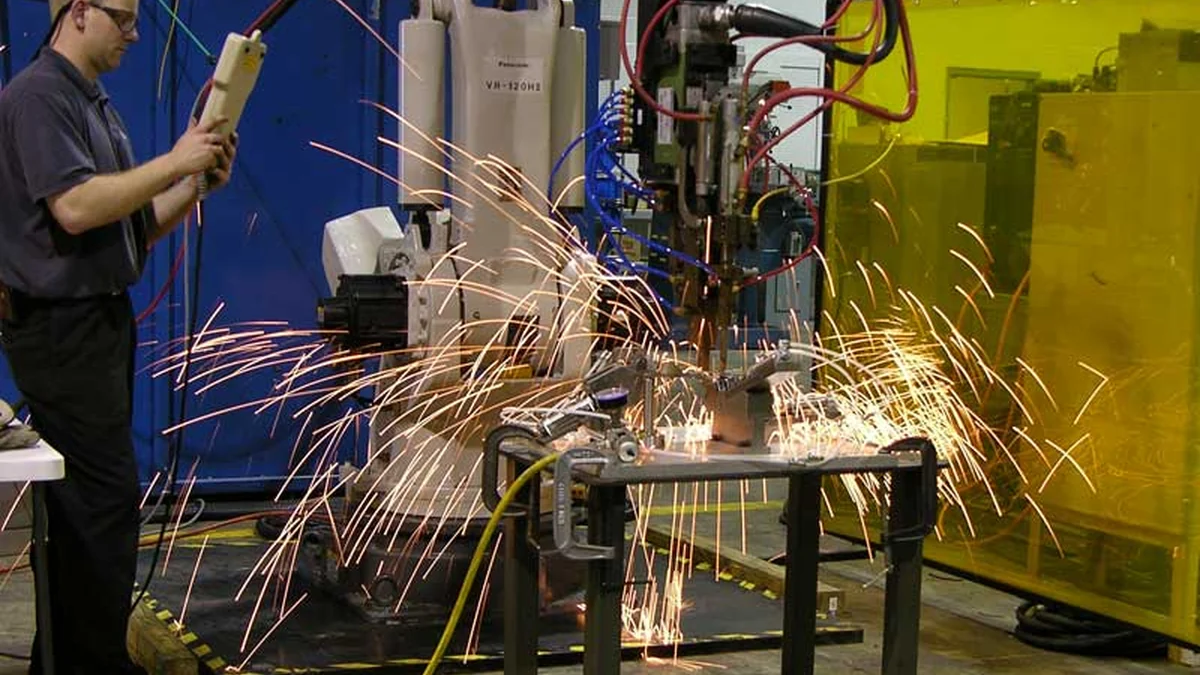
Sheet metal welding joins thin metal parts into assemblies such as enclosures, frames, brackets, guards, covers, trays, and structural panels. Because sheet metal is relatively thin, welding must be controlled carefully to avoid burn-through, distortion, weak joints, and poor cosmetic results.
The right welding method depends on material, thickness, joint design, production volume, strength requirements, and appearance expectations. For many fabricated products, welding works alongside cutting, bending, machining, hardware insertion, and surface finishing.
What Is Sheet Metal Welding?
Sheet metal welding is the process of joining sheet components by applying heat, pressure, filler material, electrical resistance, or a combination of these. The goal is to create a strong joint without damaging the thin surrounding material.
Common Sheet Metal Welding Methods
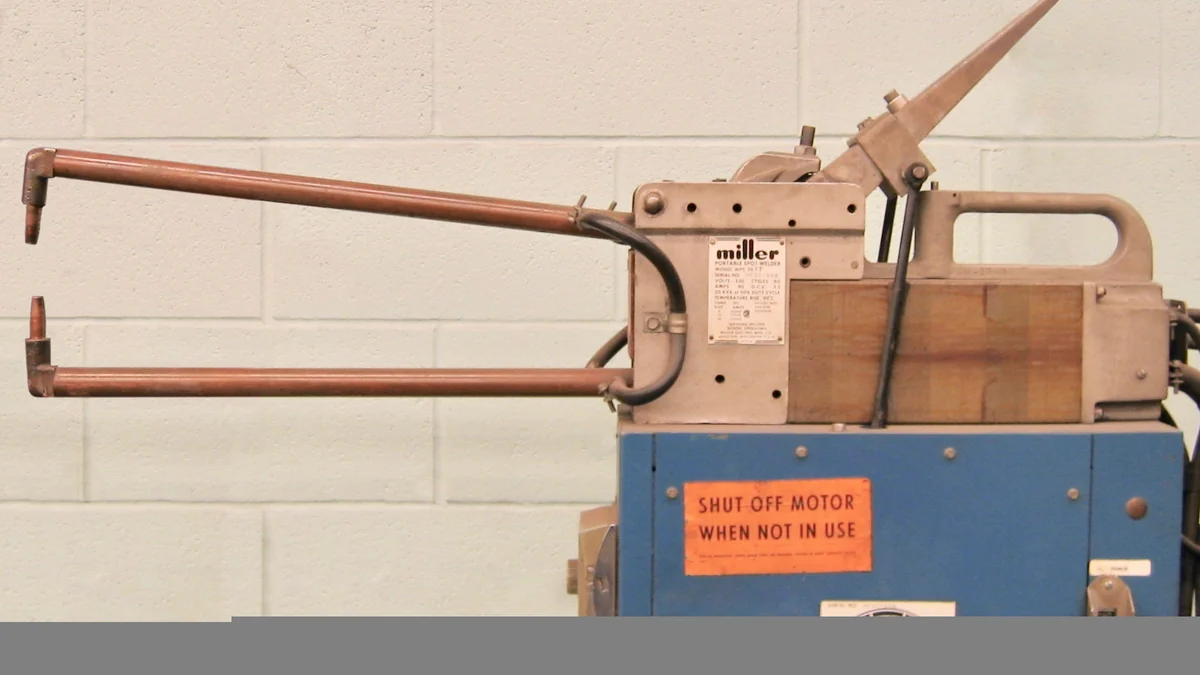
Source: Wikimedia Commons, CC0.
Several welding methods can be used for sheet metal, and each has different strengths.
- Resistance spot welding: Uses pressure and electric current to join overlapping sheets at localized spots.
- MIG welding: Uses a continuously fed wire electrode and shielding gas, often for steel and aluminum fabrication.
- TIG welding: Offers precise control and clean welds, useful for thin stainless steel and aluminum parts.
- Laser welding: Produces narrow, precise welds with low heat input, often for high-precision or automated production.
- Seam welding: Creates continuous or semi-continuous welds for leak-resistant joints.
Material and Thickness Considerations
Mild steel, stainless steel, aluminum, galvanized steel, and copper alloys can all be welded, but they behave differently. Thin aluminum conducts heat quickly and can distort easily. Stainless steel can discolor or warp if heat input is too high. Galvanized steel requires ventilation and process planning because zinc coating can affect weld quality.
Design Tips for Welded Sheet Metal Parts
Good weld design starts with access. The welding tool, electrode, torch, or laser path must reach the joint. Joint type, overlap, flange size, fixture strategy, and weld sequence all affect quality.
Designers should avoid placing welds too close to precision holes, cosmetic edges, or tight tolerance interfaces. Add tabs, slots, locating features, or fixtures when repeatable alignment matters. If appearance is important, define which welds are visible and whether grinding or finishing is required.
Distortion and Heat Control
Sheet metal can move during welding because heat expands and contracts the material. Distortion can affect flatness, hole alignment, and assembly fit. Common controls include tack welding, balanced weld sequences, fixturing, lower heat input, shorter welds, and process selection.
For parts that also include bends or CNC machined details, identify final inspection datums after welding. A part may be dimensionally correct before welding but shift after heat is applied.
Common Welding Defects
Typical sheet metal welding defects include burn-through, porosity, lack of fusion, undercut, excessive spatter, distortion, and visible discoloration. Many defects are preventable with clean material, proper fit-up, suitable parameters, and consistent fixturing.
Conclusion
Sheet metal welding is essential for many fabricated assemblies, but thin material demands careful process control. By matching the welding method to the material, joint design, and production volume, teams can improve strength, appearance, and repeatability. CNCMAVEN can help evaluate whether welded sheet metal, bending, stamping, CNC machining, or a hybrid approach is best for your part.