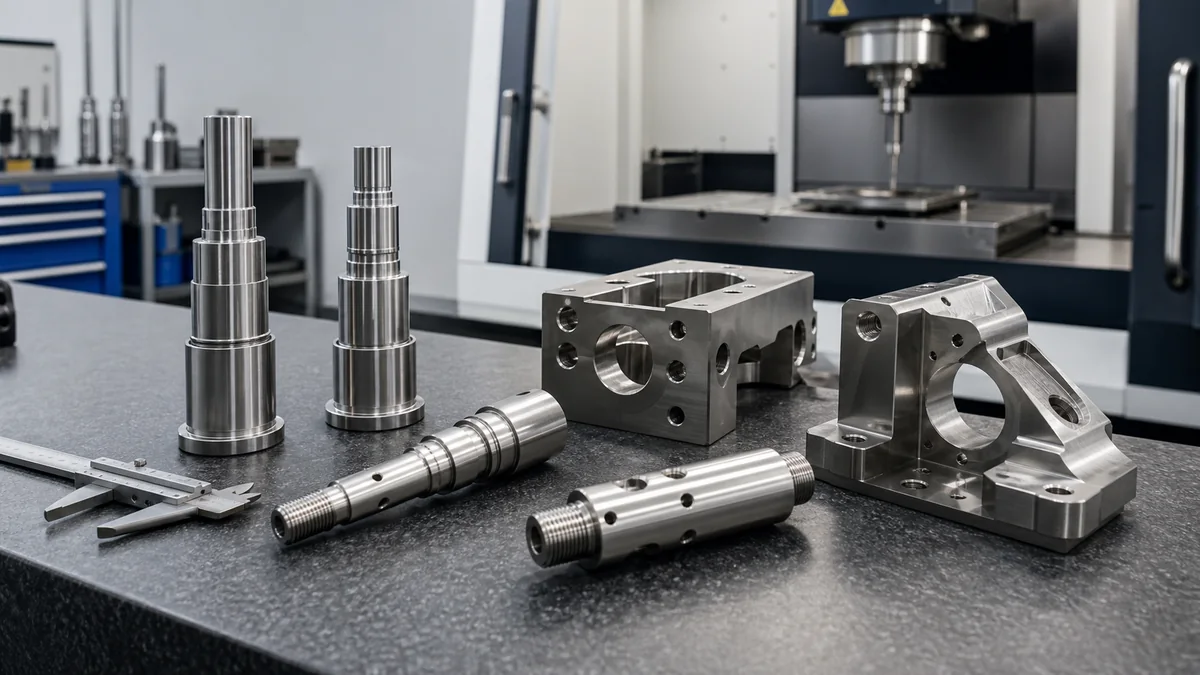
Stainless steel is a strong CNC material when the part needs corrosion resistance, strength, clean appearance, or long service life in a demanding environment. It is also less forgiving than aluminum or mild steel. If the alloy, toolpath, tolerance plan, and finish are chosen casually, stainless steel can work harden, wear tools quickly, distort thin features, or become more expensive than the function requires.
This guide is written for engineers and buyers who need stainless steel CNC parts quoted and manufactured with fewer surprises. It focuses on alloy choice, DFM details, tolerance planning, finishing, and RFQ information that actually affects manufacturability.
Choose the stainless alloy before you design the quote package
The first sourcing decision is not simply “stainless steel.” Different stainless grades machine differently and solve different problems. 304 is a common general-purpose austenitic stainless for corrosion resistance and appearance. 316 adds molybdenum, which improves corrosion resistance in chloride or marine-like conditions, but it is usually tougher to machine. 303 is easier to machine because of sulfur additions, but it is not always acceptable for welded or highly corrosion-sensitive parts. 17-4PH can be heat treated for higher strength, but the heat treatment condition must be specified clearly.
| Alloy | Good fit | Machining or sourcing caution |
|---|---|---|
| 304 stainless steel | General corrosion resistance, brackets, housings, food-adjacent hardware, cosmetic parts. | Can work harden; thin walls may move during machining. |
| 316 stainless steel | Marine, chemical, medical-adjacent, or chloride-exposed components. | More difficult to machine than 304; expect more tool wear and careful cutting parameters. |
| 303 stainless steel | Turned parts, fittings, shafts, fastener-like parts where machinability matters. | Lower corrosion resistance than 304/316 and not ideal for every welding or sanitary requirement. |
| 17-4PH stainless steel | Higher-strength shafts, blocks, tooling details, aerospace-style hardware. | Specify heat treatment condition and whether machining occurs before or after aging. |
Control work hardening instead of fighting it late
Austenitic stainless steels such as 304 and 316 can work harden when the cutting edge rubs instead of cutting cleanly. Once the surface hardens, the next pass becomes harder on the tool and can create more heat. This is why stainless machining usually needs sharp tools, suitable feed, enough depth of cut to get under the hardened layer, stable workholding, and coolant that removes heat and chips.
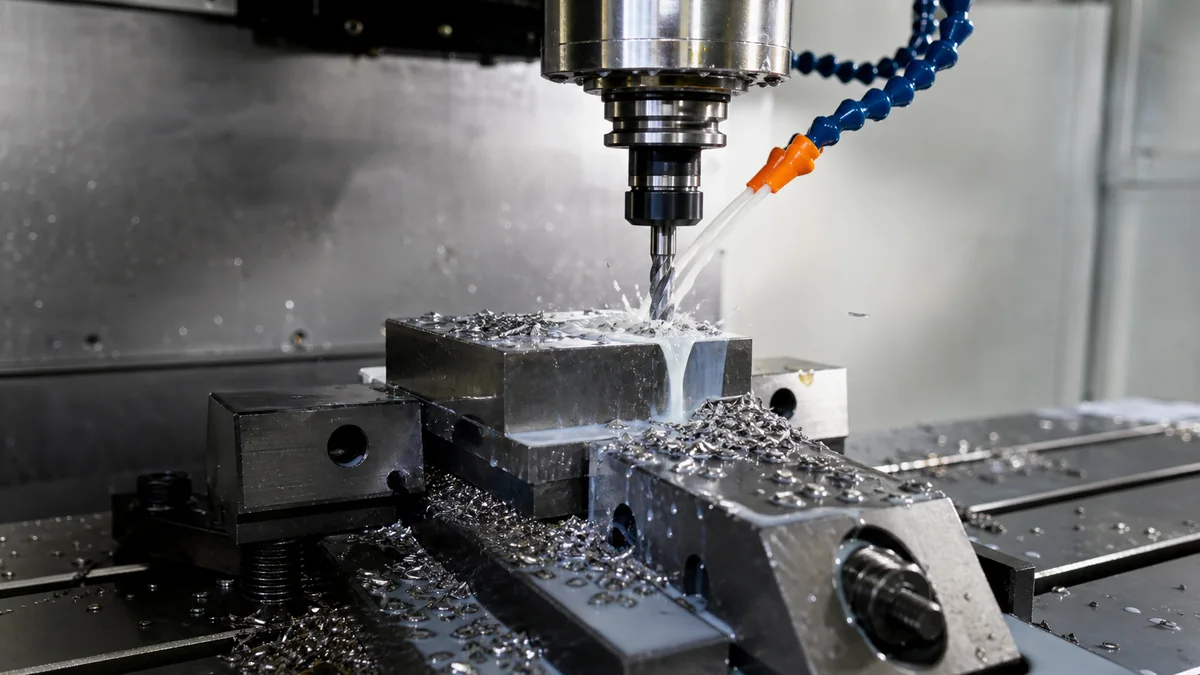
For buyers, this affects more than shop-floor technique. Avoid drawings that force repeated light finishing passes on deep pockets or thin walls without a functional reason. Where possible, separate cosmetic surfaces from true precision datums. If only one bore or sealing land is critical, identify that feature instead of applying tight tolerances across the whole part.
DFM checklist for stainless steel CNC parts
- Wall thickness: Thin stainless walls can vibrate and move after material is removed. Use ribs, larger radii, or relaxed non-critical tolerances where possible.
- Inside corners: Do not specify sharp internal corners unless EDM or another secondary process is expected. Milling tools need a radius, and larger radii reduce tool stress.
- Deep pockets: Deep narrow pockets increase tool deflection and heat. If the pocket is only for clearance, widen it or allow a larger corner radius.
- Threads: Stainless threads can gall during assembly. Call out thread engagement, insert requirements, lubricant restrictions, and whether passivation is needed after tapping.
- Surface finish: A decorative brushed finish, bead blast, electropolish, or passivation requirement should be defined early because it affects stock allowance and inspection.
Tolerance planning: do not over-tighten the whole part
Stainless steel can hold precise tolerances, but blanket tight tolerances raise cost quickly. Tight tolerance features need stable datum choices, realistic inspection access, and sometimes a different machining sequence. If a flatness requirement applies after passivation, polishing, or heat treatment, say so on the drawing. If the part only needs one bearing fit and several clearance holes, apply tight tolerance to the bearing feature and leave clearance holes at a practical general tolerance.
| Feature | Usually needs tighter control | Often can be relaxed |
|---|---|---|
| Bearing or dowel bore | Diameter, roundness, location to datum. | Cosmetic outer profile if not functional. |
| Sealing face | Flatness, surface roughness, burr control. | Hidden relief pocket dimensions. |
| Threaded hole | Thread class, depth, perpendicularity if assembly-critical. | Counterbore cosmetic edge if covered. |
| Thin bracket | Hole-to-hole location and bend-free flatness zones. | Overall outline where clearance exists. |
Finishing choices for stainless steel CNC parts
Stainless steel is often selected for its surface performance as much as its mechanical properties. Passivation can help remove free iron and improve corrosion resistance. Bead blasting can create a uniform matte look but may slightly change the surface texture and hide small tool marks. Brushing creates directional grain, which should be aligned with visible faces. Electropolishing may improve cleanability and corrosion behavior, but it can round small edges and affect dimensions.
For related finish planning, see CNCMAVEN’s surface finishing services and the guide to bead blasting for CNC machined parts.
RFQ information that prevents stainless machining surprises
A good stainless steel RFQ should include the exact alloy, heat treatment condition if applicable, 2D drawing with datums, 3D model, critical-to-function dimensions, surface finish requirements, passivation or cleaning requirements, thread details, annual volume, expected environment, and any inspection report requirements. If the part contacts food, medical devices, seawater, chemicals, or high temperature, state the environment rather than assuming the alloy name tells the whole story.
CNCMAVEN supports custom stainless parts through CNC machining services. For geometry planning before quote, the article on DFM considerations for CNC milling is also a useful companion.
FAQ
Is 316 stainless harder to machine than 304?
Usually yes. 316 is tougher and more prone to machining difficulty, so it often needs more conservative cutting strategy, sharp tooling, and realistic cost expectations.
Which stainless steel is easiest to CNC machine?
303 stainless is often easier to machine than 304 or 316, but it is not the best choice for every corrosion, welding, or sanitary requirement.
Should stainless steel CNC parts be passivated?
Passivation is useful when corrosion resistance and cleanliness matter. It should be specified on the drawing or RFQ because it affects finishing and inspection expectations.
Conclusion
Stainless steel CNC machining works best when alloy choice, tolerance strategy, cutting risk, and finishing are treated as one manufacturing plan. Use 304, 316, 303, or 17-4PH for the problem each grade actually solves, then define only the tolerances and finishes that matter to the part’s function.