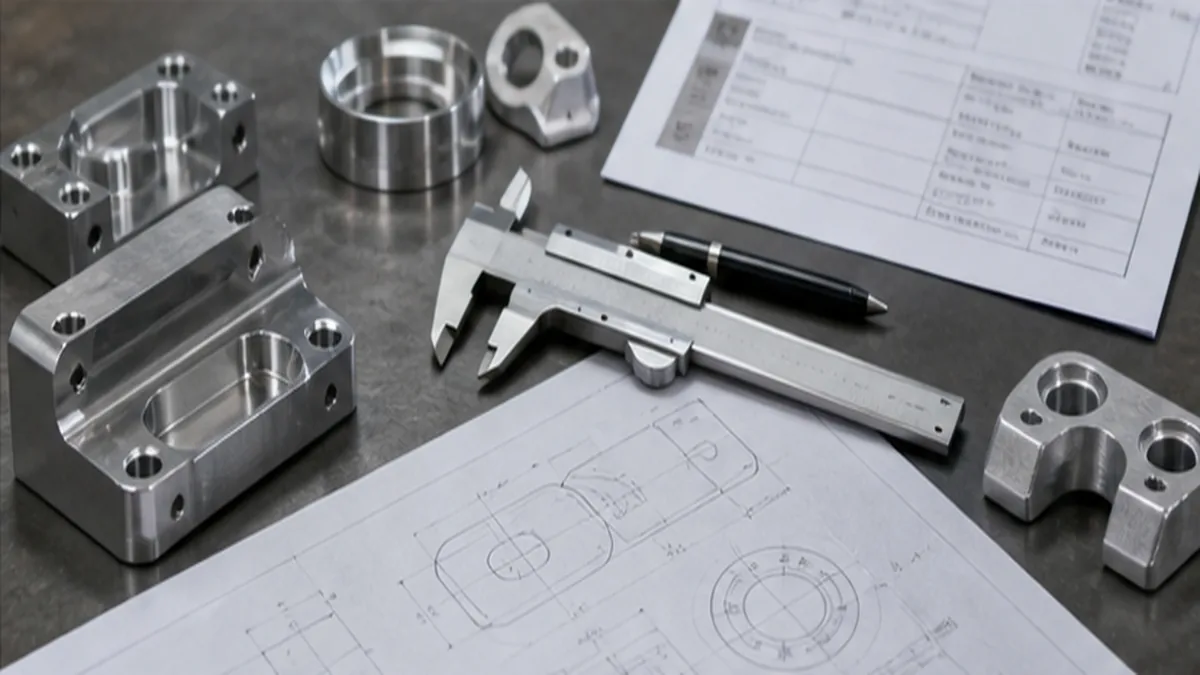
CNC machining cost is shaped by the part, the process plan, and the evidence required for acceptance. Material, stock size, removed volume, tool access, setup count, tolerance, finish, quantity, inspection, and documentation can all change a quote. The goal is not to remove requirements that protect function. It is to identify which requirements carry engineering value and which add machining or inspection work without improving the part.
Key Takeaways
- Compare quotations only when material, revision, quantity, finish, inspection, documentation, and delivery scope match.
- Mark functional fits, datums, sealing faces, and interfaces; avoid applying the tightest tolerance to every feature.
- Reduce avoidable setups, long tool reach, thin flexible sections, deep narrow pockets, and inaccessible internal corners.
- Use standard stock, tools, holes, threads, and finishes where they meet the design requirement.
- Ask for DFM feedback before the drawing is frozen, then document every approved change.
1. Start with the Right Material
Material cost includes raw stock, availability, preparation, machining response, tool wear, and any required traceability. An easy-to-source grade may be economical for one geometry but unsuitable for the load, temperature, corrosion exposure, wear, or finish. Select the least costly material that still meets the functional requirement, and require approval before any substitution.
Use standard stock sizes when practical. A part that nests efficiently in common bar or plate may reduce waste and preparation, but the supplier should confirm machining allowance, flatness, grain or rolling direction, and available condition.
2. Design for Fewer Setups
Every time a part must be removed from the machine, re-clamped, and re-indicated, cost increases. If a part can be completed in one or two setups instead of four, both fixturing time and positional error drop. Design features so they can be accessed from the same side or at least limit the number of clamping orientations.
Where possible, align holes, pockets, and slots to the same tool axis direction. This avoids unnecessary rotations or re-fixturing.
3. Reduce Unnecessary Tight Tolerances
Tolerances affect process selection, finishing passes, environmental control, inspection time, gauges, and yield. Reserve tighter limits for features that control fit, sealing, motion, alignment, or performance. Use a practical general tolerance for the remaining dimensions and identify the critical characteristics on the drawing.
State the datum scheme and measurement condition. The supplier should confirm achievable results against material, geometry, feature size, setup, surface finish, and inspection method rather than relying on a universal tolerance rule.
4. Keep Internal Corners as Large as Practical
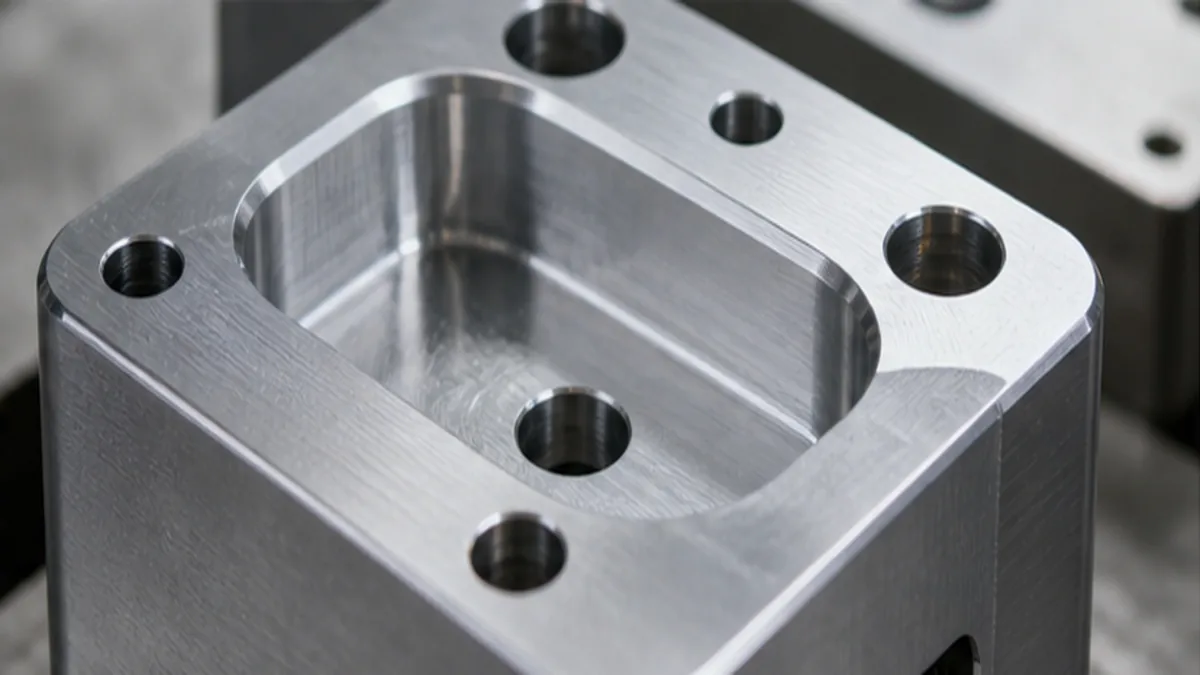
Small internal radii require smaller or longer-reach tools and may add finishing work. Use the largest radius that preserves function and allows mating components to clear. If a sharp internal corner is essential, ask the supplier to compare a secondary process or a design change instead of assuming it belongs in the main milling operation.
5. Avoid Deep, Narrow Pockets and Slots
Deep features can require long-reach tools, reduced engagement, added chip control, and extra inspection. Risk depends on depth, opening width, tool diameter, material, corner radius, and access. Make pockets shallower or wider where function permits, or review another orientation, split construction, or secondary process.
6. Limit Surface Finish Requirements
Specifying a fine surface finish across the entire part adds cost. Designate cosmetic surfaces, functional surfaces, and as-machined surfaces separately on the drawing. Only polished, ground, or fine-finished surfaces should carry the tightest Ra requirements.
CNC Machining Cost Driver and Buyer Decision Table
| Cost driver | Why it changes the quote | Buyer decision |
|---|---|---|
| Material and stock | Purchase price, availability, preparation, machinability, waste, and traceability | Specify grade and condition; list approved alternatives or require approval |
| Setup count | Programming, fixtures, indicating, handling, and datum transfer | Group accessible features and ask whether geometry can reduce orientations |
| Tool access | Small radii, deep pockets, narrow slots, and undercuts may require special tools or processes | Preserve only features that carry function |
| Tolerance and inspection | Finishing passes, gauges, measurement time, reporting, and yield risk | Number critical characteristics and define the required evidence |
| Surface finish | Extra operations, masking, outside processing, handling, and cosmetic control | Separate functional, cosmetic, and as-machined surfaces |
| Quantity and revision stability | Programming and fixtures are spread across parts; changes can invalidate work | Quote realistic quantity breaks and freeze the controlled revision |
| Documentation and packaging | Material records, inspection reports, special tests, and surface protection add scope | Request only the evidence and protection the application needs |
7. Standardize Holes and Threads
Use standard drill sizes, standard thread sizes, and standard countersink angles. Custom sizes may require special tooling, additional setups, or slower operations. M6, M8, M10 coarse threads and standard clearance holes are cheaper to produce than fine-pitch or non-standard threads.
8. Mill Text Instead of Engraving When Possible
Engraving small text with a tiny tool adds time and tool wear. Where identification marks or part numbers are needed, make text large enough to mill with standard cutters, or use laser marking as a secondary operation.
9. Avoid Thin Walls That Cause Vibration
Thin walls can deflect during cutting, move under clamping force, and change shape after release. The practical limit depends on material, height, support, tool access, stock condition, tolerance, and measurement state. Increase thickness, add ribs or flanges, or define restrained inspection where function allows.
10. Batch Your Orders
Programming, setup, fixtures, and inspection planning are fixed work that may be spread across a batch. Ask for quantity breaks that match realistic demand, but also consider revision risk, inventory, storage, and the cost of ordering parts that may change.
11. Combine Multiple Parts Into One Design
If several small parts bolt together, consider whether they can be redesigned as a single machined component. This reduces part count, assembly labor, and the number of separate setups across different parts. The single part may be more complex, but the total program cost can be lower.
12. Use 3-Axis When 5-Axis Is Not Required
Machine choice should follow total process cost, not axis count alone. A simpler part may suit 3-axis machining, while a multi-sided part may use 5-axis access to reduce fixtures and datum transfers. Ask the supplier to compare setups, programming, workholding, tool reach, inspection, and risk for the actual geometry.
13. Get DFM Feedback Before Releasing the Drawing
A machining supplier can often suggest changes that reduce cost without affecting function. Showing the design before it is locked allows the shop to flag deep pockets, thin walls, awkward setups, and over-toleranced features while changes are still easy.
14. Choose the Right Supplier for the Job
Not every CNC shop is equipped for the same work. A shop with high-speed 5-axis machines may be overkill for simple 3-axis aluminum brackets, while a shop focused on simple work may not have the capability for tight-tolerance multi-material parts. Match the supplier to the part complexity and volume.
Frequently Asked Questions
Get a Cost Review Based on the Actual Part
Use CNCMAVEN’s CNC machining services page to review the broader process scope, and see Dịch vụ hoàn thiện bề mặt when coating, polishing, blasting, plating, or masking affects the quote. To request part-specific DFM and pricing review, send the model, drawing, quantities, material, finish, and inspection requirements through Liên hệ với chúng tôi.
A reliable quotation depends on the supplied revision and scope. This article does not provide fixed prices or lead times; both must be confirmed for the actual geometry, material, quantity, finish, quality evidence, and delivery requirement.
Conclusion
CNC machining cost is best managed before release, when material, geometry, tolerances, finishes, and inspection requirements can still be changed. Keep the requirements that protect function, remove those that do not, and compare supplier quotations on the same revision and scope.