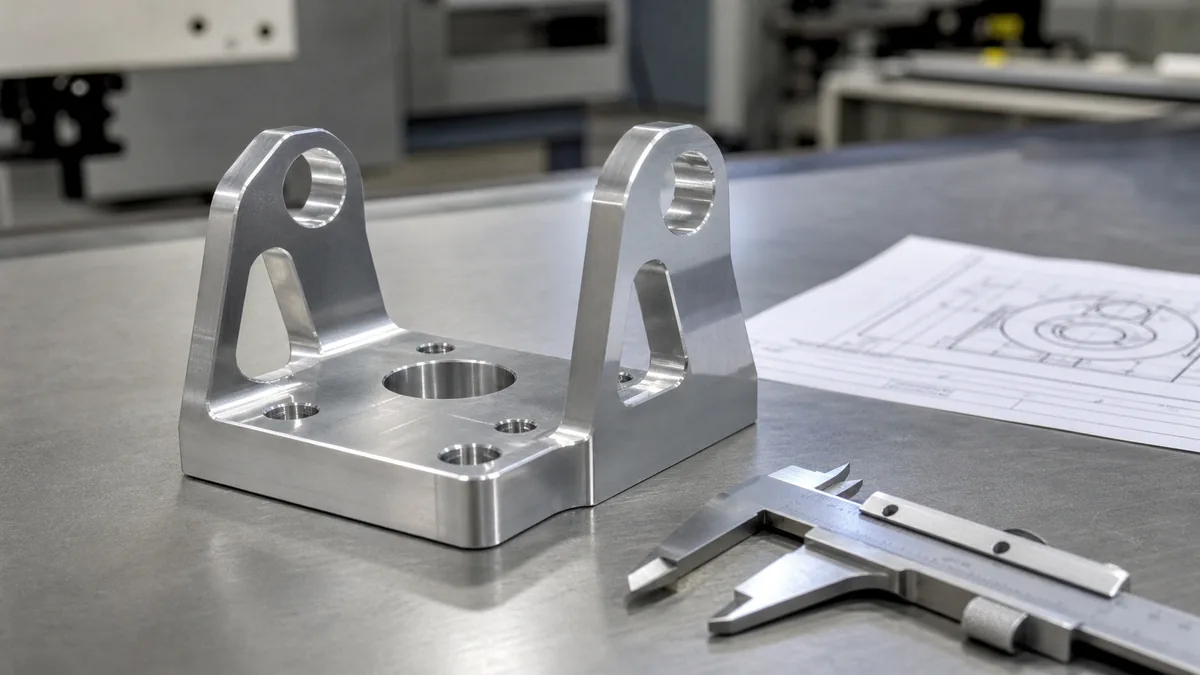
A CNC manufacturing partner should be evaluated before the RFQ becomes a price race. The right partner can review drawings, flag manufacturing risks, document inspection, and support the move from prototype to repeat orders. The wrong one may still quote quickly, but the real cost appears later as unclear tolerances, missed finish requirements, weak packaging, or inconsistent communication.
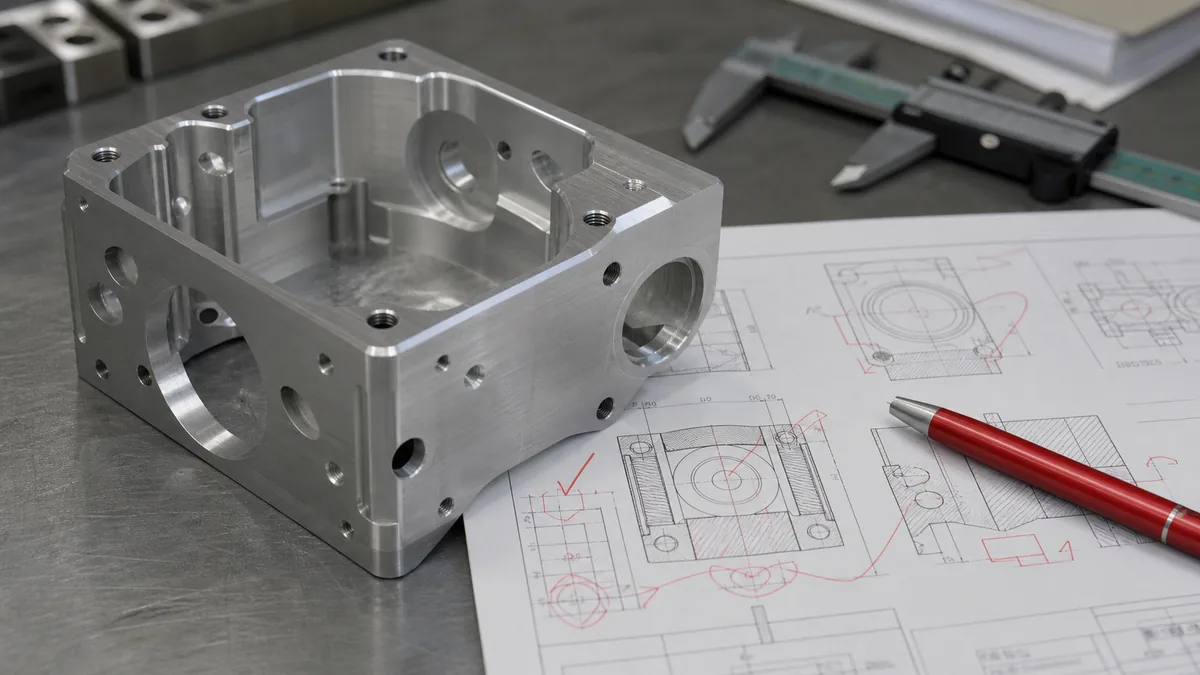
Start With the Type of Partner You Actually Need
The first step is to define the work you need the supplier to perform, not just the machining process. A prototype-only shop, a production machining supplier, a finishing coordinator, and an export-focused manufacturing partner are not interchangeable.
If you need one prototype bracket, fast quoting and basic machining capability may be enough. If you need recurring machined assemblies, cosmetic finishes, tight documentation, and international shipping, you need a partner that can manage more than toolpaths. The supplier should understand drawings, material traceability expectations, finish control, inspection reporting, packaging, and change management.
Write down the project profile before contacting suppliers: prototype or production, target annual volume, materials, critical tolerances, surface finish, inspection level, packaging requirement, and whether the supplier must coordinate secondary processes. This prevents you from choosing a shop based only on a low unit price that does not include the real scope.
Use a Vetting Matrix Instead of Comparing Quotes Blindly
A vetting matrix makes supplier comparison more objective. It also helps procurement teams explain why the lowest quote may not be the lowest-risk choice.
| Vetting area | What to check | Why it matters |
|---|---|---|
| Engineering review | Does the supplier ask about tolerances, datums, tool access, material, and finish before quoting? | Good questions show that the supplier is reading the drawing, not only pricing the model volume. |
| Process capability | Can the supplier support the required milling, turning, EDM, finishing, inspection, and volume path? | A single missing process can create handoffs, delays, or uncontrolled subcontracting. |
| Quality evidence | Can they provide inspection reports, photos, first article data, or sample documentation? | Quality claims matter less than repeatable evidence tied to the drawing. |
| Communication | Do they respond with clear questions, documented assumptions, and realistic lead time? | Poor communication before purchase usually gets worse after an order is placed. |
| Export readiness | Can they package, label, document, and ship parts according to your destination requirements? | International projects fail when packaging and paperwork are treated as afterthoughts. |
This matrix is intentionally practical. It does not require a long supplier audit for every prototype. It gives buyers a way to screen for the risks that most often damage CNC projects.
Send a Quote Package That Tests Their Review Quality
A clear RFQ package is both a buying tool and a supplier test. If a supplier ignores obvious missing information, that is useful evidence before you place an order.
Include a STEP file, 2D drawing, material grade, quantity range, finish requirement, tolerance notes, inspection expectations, and any known application constraints. If the part has cosmetic faces, threaded holes, sealing surfaces, or press-fit features, mark them on the drawing. If the part is a prototype that may move to production, say so.
Then evaluate the supplier response. A strong response may ask about tolerance priority, finish masking, thread gauges, stock availability, or whether a radius can be adjusted for tooling. A weak response may return a price without acknowledging drawing conflicts, missing finish details, or unrealistic tolerances. Fast is useful only when fast is also informed.
For a detailed RFQ structure, use CNCMAVEN’s guide on preparing a CNC machining quote package. If the supplier asks for a different CAD format, also review which CAD files CNC suppliers actually need.
Look for Engineering Pushback, Not Automatic Agreement
A capable manufacturing partner should challenge unclear or risky requirements. Automatic agreement can feel convenient, but it may mean the supplier has not reviewed the design deeply enough.
Useful pushback includes questions such as: Which tolerance is truly critical? Can a sharp internal corner have a radius? Should this bore be inspected after finishing? Is this cosmetic face allowed to have fixturing marks? Can the material be substituted if stock is unavailable? Should a thin wall be supported differently for production?
Pushback is not the same as refusing the work. It is evidence that the supplier understands how geometry, tooling, material, and inspection interact. For overseas buyers, this is especially important because rework across borders can consume more time than the original machining process.
Verify Quality Control Before You Need a Corrective Action
Quality control should be discussed before purchase, not after a failed assembly. Ask what the supplier will inspect, what report format they can provide, and how they handle nonconforming parts.
| Quality question | Good answer signal | Risk signal |
|---|---|---|
| Which dimensions will be inspected? | They identify drawing-critical features and propose first article or batch checks. | They say “all dimensions” without explaining method or priority. |
| How are cosmetic surfaces controlled? | They ask for samples, photos, surface notes, or acceptance criteria. | They assume a finish name is enough for appearance approval. |
| How are finish and masking verified? | They discuss post-finish inspection and protected features. | They treat finishing as separate from dimensional acceptance. |
| What happens if parts fail inspection? | They explain containment, communication, rework, remake, or approval steps. | They avoid the question or promise that failures will not happen. |
For more detail on acceptance checks, read what quality CNC machining means before parts ship. The goal is not to demand paperwork for its own sake; it is to align inspection with the features that control function.
Check Secondary Processes and Ownership
Many CNC parts are not complete when machining ends. They may need heat treatment, anodizing, bead blasting, powder coating, plating, passivation, assembly, inserts, engraving, or protective packaging. A manufacturing partner should explain which steps are in-house, which are outsourced, and who owns final quality.
Ask how secondary processes are scheduled and inspected. If a part is finished after machining, clarify whether dimensions apply before or after finishing. If masking is required, confirm who prepares the masking instructions. If packaging protects cosmetic surfaces, define it before the shipment leaves the supplier.
This matters because secondary process failures are often blamed on the last visible step, even when the root cause was an unclear RFQ. A supplier that coordinates finishing must still understand the machined features that cannot be damaged or coated.
Run a Pilot Order Before Scaling Volume
A pilot order is the safest way to test a manufacturing partner before volume production. It should validate communication, machining quality, finish control, inspection reporting, packaging, and how the supplier handles feedback.
Do not judge the pilot only by whether the parts arrive. Review whether the supplier asked useful questions, met documented requirements, reported issues early, and delivered parts that match the drawing and cosmetic expectations. If the pilot exposes a small issue but the supplier responds clearly and corrects the process, that may be a better signal than a silent supplier who happens to ship one acceptable batch.
When the project is moving from prototype to repeat production, document every approved change. Material substitutions, tolerance relaxations, finish changes, packaging updates, and inspection plans should be captured before the next order. CNCMAVEN’s article on moving CNC parts from prototype to volume production explains how those handoffs affect repeatability.
Red Flags Before You Place the Order
Some supplier risks are visible before the purchase order. Treat them seriously, especially for overseas CNC projects where recovery time is expensive.
- The quote ignores drawing notes, material grade, finish, or inspection requirements.
- The supplier refuses to discuss tolerances but promises “high precision” in general terms.
- Lead time is much shorter than other quotes without an explanation of stock and process flow.
- The supplier cannot explain who handles finishing or how finished parts are inspected.
- Communication changes from clear before payment to vague after technical questions begin.
- They push substitutions without explaining mechanical, cosmetic, or inspection consequences.
One red flag does not automatically disqualify a supplier, but it should trigger a clarification before the order is placed. The earlier you resolve assumptions, the less likely you are to pay for rework later.
Final Buying Advice
Vet CNC manufacturing partners by how they handle risk before they handle your parts. A good partner reviews the RFQ, asks specific engineering questions, documents inspection, manages secondary processes, and communicates tradeoffs clearly. Price still matters, but it should be compared only after the technical scope, finish requirements, quality evidence, and logistics responsibilities are understood.
What should I ask a CNC manufacturing partner before ordering?
Ask about process capability, drawing review, material availability, finish control, inspection reporting, secondary processes, packaging, export handling, and how they respond to nonconforming parts.
Is the lowest CNC quote usually the best choice?
Not necessarily. A low quote may exclude finishing, inspection, masking, packaging, or production support. Compare quotes only after confirming the same technical scope.
Should I run a pilot order before production?
Yes when the part has tight tolerances, cosmetic requirements, secondary processes, or repeat production potential. A pilot order validates both part quality and supplier communication.