Impression die forging, often called closed die forging, is used when a forged part needs repeatable shape, controlled material flow, and higher production consistency than open die forging can provide.
The process still needs engineering judgment. Tooling cost, draft, flash, machining allowance, material flow, and inspection strategy all affect whether the process is a good fit.
How impression die forging works
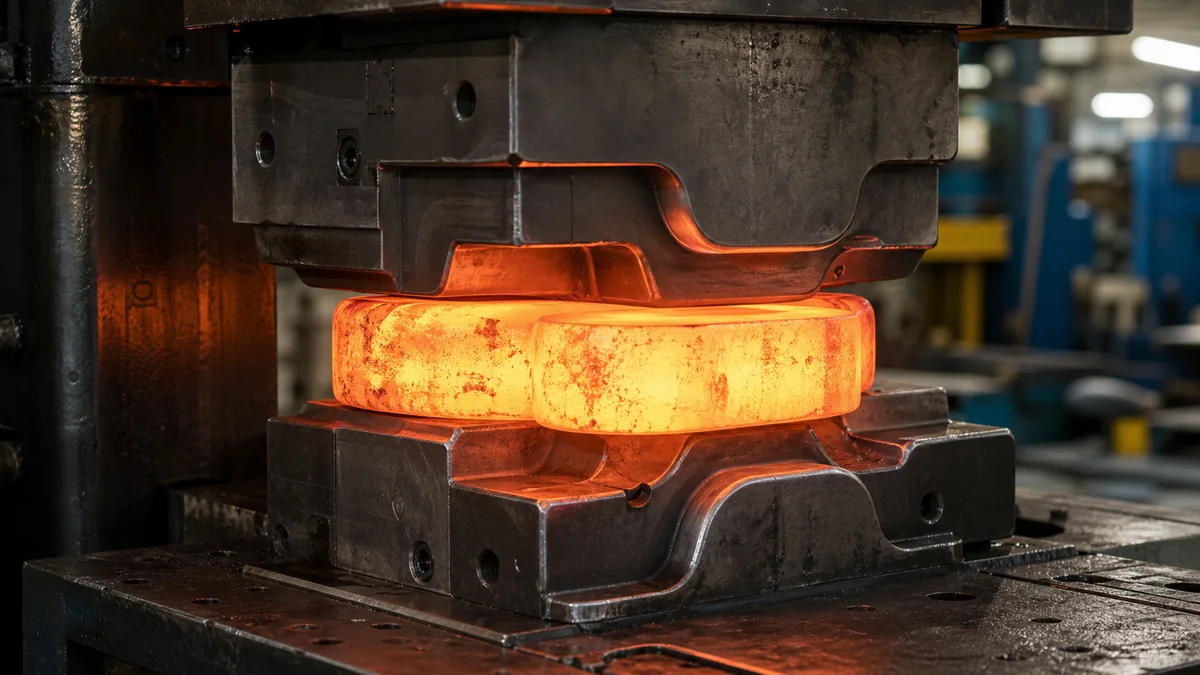
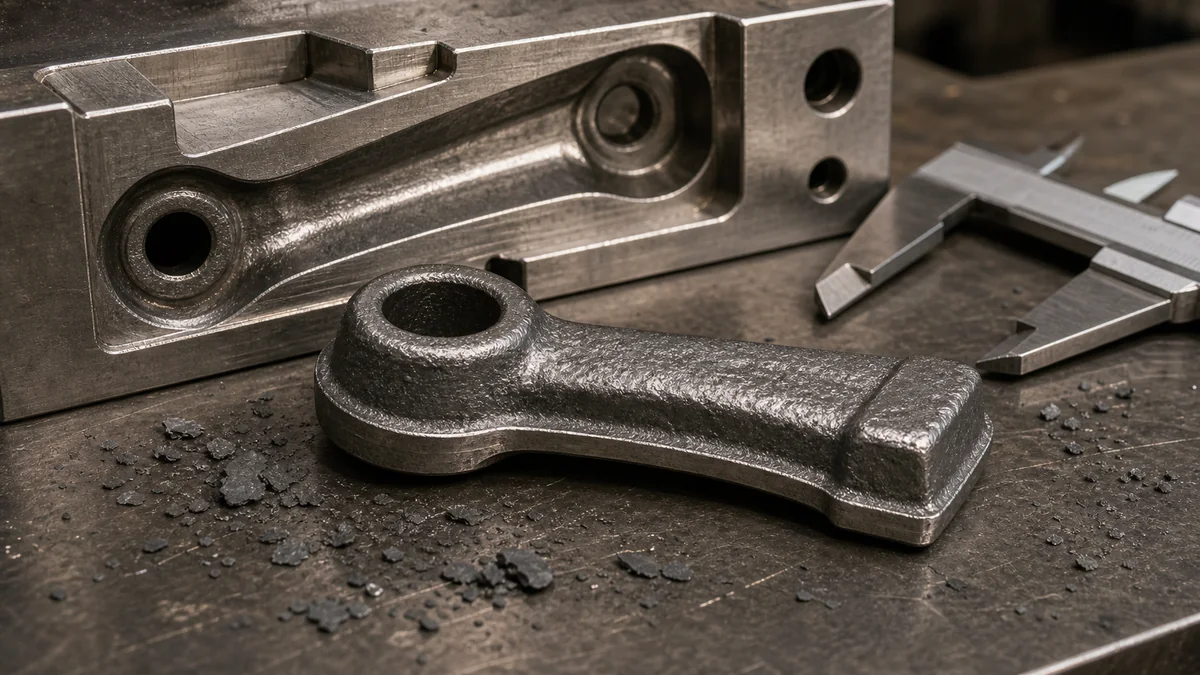
Impression die forging presses heated metal into a shaped die cavity. Excess material may flow into flash, helping the die fill while creating material that is trimmed away after forging.
Where impression die forging works best
This method is useful for connecting rods, levers, arms, brackets, fittings, and other parts that need strength and repeated geometry at production volume.
| Decision factor | Good fit | Potential issue |
|---|---|---|
| Volume | Medium to high production can justify dies. | Low volume may not absorb tooling cost. |
| Geometry | Repeatable shapes with forged strength. | Sharp corners and deep pockets can complicate fill. |
| Tolerantie | Near-net shape before finishing. | CNC machining may still be required. |
| Strength | Grain flow can follow the part shape. | Poor die design can create laps or underfill. |
Design considerations before tooling
- Use generous radii to support material flow.
- Plan draft so the part can release from the die.
- Identify flash location and trimming strategy.
- Reserve machining allowance for precision surfaces.
- Confirm heat treatment and inspection requirements early.
FAQ
What is the difference between impression die forging and closed die forging?
In most manufacturing discussions, the terms are used very similarly. Both refer to using shaped dies to form heated metal into a repeatable cavity.
Does impression die forging produce finished dimensions?
It can produce near-net shapes, but precision faces, holes, threads, and tight datums often still need CNC machining.
Why is flash used in impression die forging?
Flash helps build pressure and encourage complete die filling. It is usually trimmed away after forging.
Conclusion
Impression die forging is a strong choice when production volume and repeatable strength justify tooling. It is most effective when forging design and CNC finishing are planned as one manufacturing route.