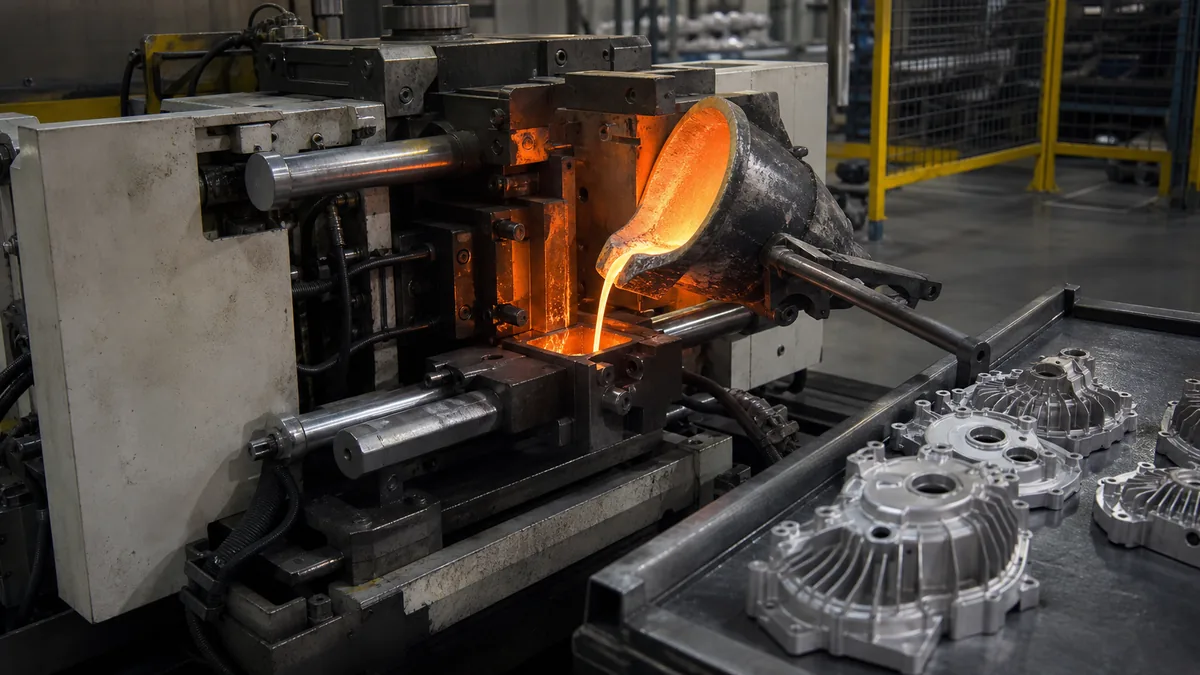
Cold chamber die casting is commonly used for aluminum, magnesium, and some copper-based alloys that are too hot or too aggressive for a hot chamber machine. For engineers and buyers, the decision is rarely just “die casting or not.” The real question is whether the part geometry, alloy, volume, strength target, porosity tolerance, and secondary machining requirements fit cold chamber production. A well-designed cold chamber die casting can reduce unit cost at scale, but poor design can lock defects into expensive tooling.
How cold chamber die casting differs from hot chamber die casting
In a hot chamber machine, the injection system is immersed in molten metal. That arrangement is efficient for lower-melting alloys such as zinc. In cold chamber die casting, molten metal is ladled or dosed into a separate shot sleeve, then forced into the die at high speed and pressure. This separation allows the process to handle aluminum alloys and other materials that would damage or dissolve hot chamber components.
CNCMAVEN recently covered hot chamber die casting for small metal parts. Cold chamber die casting sits on the other side of that decision. It is usually the better fit for aluminum housings, brackets, covers, heat sink bodies, pump parts, automotive components, and larger non-ferrous parts where zinc is not the right material.
| Decision point | Cold chamber | Hot chamber |
|---|---|---|
| Common alloys | Aluminum, magnesium, some copper-based alloys | Zinc and other lower-melting alloys |
| Machine setup | Metal is transferred into a shot sleeve for each shot | Injection system is immersed in molten metal |
| Typical parts | Aluminum housings, covers, brackets, heat-dissipation parts | Small precision zinc components and hardware |
| Main tradeoff | Handles useful aluminum alloys but needs strict process control | Fast cycling for suitable alloys but limited by alloy compatibility |
Best-fit applications for aluminum parts
Cold chamber die casting is attractive when the part needs a metal body with repeatable shape, relatively thin walls, integrated ribs, bosses, mounting pads, and good production economics at medium to high volume. It is often used for motor housings, gearbox covers, pump housings, lighting bodies, electronic enclosures, handles, structural brackets, and automotive or industrial covers. Aluminum die castings also offer good thermal conductivity, so the process is useful for heat sink housings and components that need both shape complexity and heat transfer.
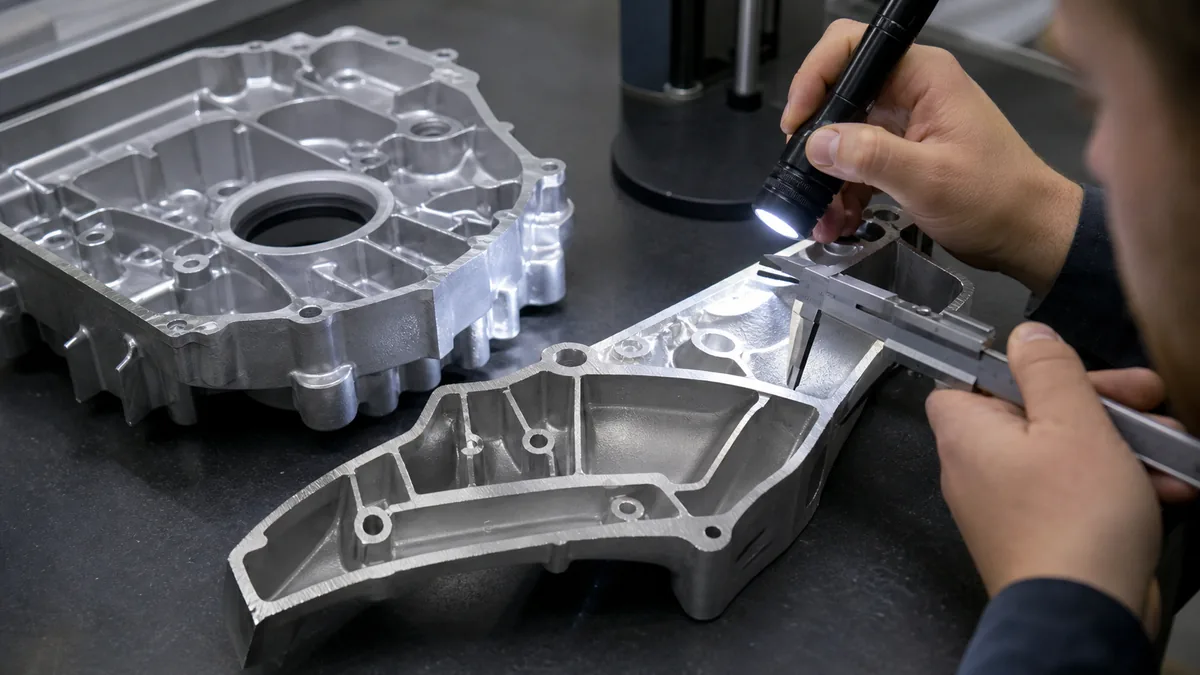
However, die casting should not be treated as a replacement for every machined aluminum part. If the part volume is low, the geometry changes frequently, or the tolerance requirement is extremely tight across many surfaces, CNC machining may be more economical. A common production strategy is to die cast the near-net shape and then use CNC machining for bearing bores, sealing faces, threaded holes, and precise datum surfaces.
Design rules that prevent expensive tooling changes
Draft angle is one of the simplest rules and one of the easiest to miss. Vertical walls need draft so the casting can release without drag marks, galling, or die damage. Aluminum parts commonly need more draft than zinc, especially on deeper walls and textured surfaces. Wall thickness should also be as uniform as practical. Abrupt thick-to-thin transitions slow solidification and can create shrinkage porosity, hot spots, and distortion.
- Use draft on walls, ribs, bosses, and textured surfaces before tooling starts.
- Replace sharp internal corners with fillets so metal flows and solidifies more evenly.
- Use ribs and gussets for stiffness instead of adding heavy solid blocks.
- Place ejector pins where marks will not interfere with sealing or cosmetic surfaces.
- Reserve machining stock only where precision is needed; too much stock can expose porosity.
- Discuss gate, runner, overflow, and vent locations before approving mold layout.
Porosity, leakage, and machining risk
Porosity is one of the main quality risks in aluminum die casting. Gas entrapment and shrinkage can be acceptable in non-critical areas but unacceptable in sealing faces, pressure housings, threads, or load-bearing sections. The risk becomes more visible after machining because cutting can open internal pores. That is why the drawing should identify machined surfaces, leak-test requirements, pressure limits, and any areas where porosity is not allowed.
| Defect or risk | Design/process driver | Practical control |
|---|---|---|
| Gas porosity | Poor venting, turbulence, trapped air | Review gating, vacuum assistance, venting, and fill simulation for critical parts. |
| Shrinkage porosity | Heavy sections and uneven cooling | Reduce mass, add radii, balance wall thickness, and improve thermal control. |
| Die soldering or drag | Inadequate draft or alloy/tooling interaction | Increase draft, polish or coat die surfaces, and control release/lubrication. |
| Leak failure after machining | Machining opens pores near sealing areas | Move gates/overflows, add machining stock carefully, specify leak testing or impregnation if needed. |
Material and finish choices
Aluminum die casting alloys are selected for castability, strength, corrosion behavior, machinability, and thermal performance. Buyers should avoid specifying a familiar wrought aluminum grade unless it is actually suitable for die casting. The supplier needs the intended application, load condition, operating temperature, exposure environment, and finishing requirement. Some parts only need deburring and shot blasting. Others need machining, vibratory finishing, painting, powder coating, plating, passivation-like cleaning, or impregnation.
Surface finish decisions should match the part function. A visible housing may need a controlled texture and coating system. A thermal part may need flat machined pads and clean surfaces for heat transfer. A sealing component may need pressure testing after machining. CNCMAVEN’s diensten voor oppervlakteafwerking are relevant when a die cast part requires coating, cosmetic improvement, or corrosion protection after casting and CNC machining.
RFQ checklist for cold chamber die casting
A strong RFQ reduces quotation uncertainty and prevents the supplier from guessing about quality level. Include the 3D file, 2D drawing, alloy preference or performance target, annual volume, expected tool life, cosmetic surfaces, machined surfaces, tolerance class, leak requirements, finishing standard, and packaging needs. If the part is replacing a CNC-machined component, explain which tolerances are truly functional. If the part is replacing a fabricated assembly, define the load path and assembly interfaces.
| RFQ field | Minimum detail to include |
|---|---|
| Alloy and performance | Strength, corrosion, temperature, conductivity, and regulatory constraints. |
| Critical surfaces | Sealing faces, bores, threads, cosmetic faces, and datum features. |
| Machining plan | Which features are cast, drilled, tapped, reamed, milled, or turned after casting. |
| Inspection | Dimensional report, leak test, X-ray, CT, pressure test, coating inspection, or functional gauge. |
| Production economics | Annual volume, batch size, target cost, tool ownership, sample approval, and PPAP-like documentation if required. |
When cold chamber die casting is not enough by itself
Most precision aluminum die cast parts still need secondary operations. Threads may be tapped, sealing faces milled, bearing seats bored, and sharp edges deburred. Some parts need heat treatment or impregnation, although not every die casting is a good candidate for every downstream process. Buyers should treat casting, machining, finishing, and inspection as one manufacturing route. If each step is sourced separately without a shared datum plan, dimensional stack-up and quality disputes become more likely.
Is cold chamber die casting only for aluminum?
No. It is strongly associated with aluminum, but it can also be used for magnesium and some other non-ferrous alloys when hot chamber equipment is unsuitable.
Can die cast aluminum parts be CNC machined?
Yes. Many die castings are CNC machined after casting, especially for bores, sealing faces, threads, and datum surfaces.
How can buyers reduce porosity risk?
Identify pressure, sealing, and machined areas early, then review gating, venting, wall thickness, inspection, and leak testing with the supplier before tooling approval.