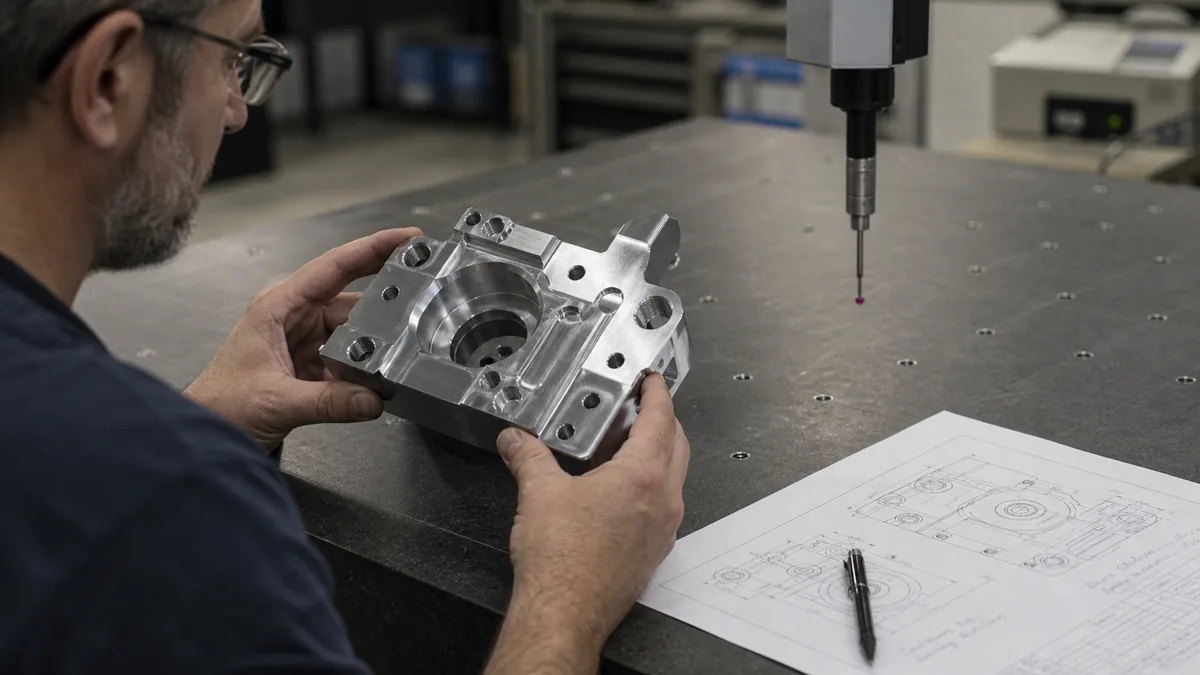
A CNC surface finish should not be chosen from a color chart alone. The right finish depends on what the part must survive, which surfaces are functional, how tight the tolerances are, and how the supplier will mask, inspect, and package the parts. This guide helps engineers and buyers choose finishes that match real service conditions instead of creating late-stage rework after machining is complete.
Start With the Job the Finish Must Do
The first decision is functional: identify whether the finish is mainly for corrosion resistance, wear behavior, electrical performance, appearance, cleaning, or handling. Many RFQs simply say “black anodize” or “smooth finish,” but that does not tell the supplier which surfaces matter or what failure would look like in the field.
For example, a visible aluminum enclosure may need consistent color and low handling marks. A bracket inside equipment may need corrosion resistance but no cosmetic color requirement. A sliding component may need a controlled coating thickness or a finish that will not build up inside a bore. A stainless part used in a wet environment may need passivation rather than paint. These are different manufacturing problems, even if they all appear under the broad label of “surface finish.”
Before requesting a quote, mark the drawing with finish zones. Separate cosmetic faces, sealing surfaces, threaded holes, bearing areas, electrical contact points, and surfaces that can remain as-machined. This prevents the supplier from applying a finish where it damages fit or from spending time finishing hidden surfaces that do not matter.
Use a Selection Matrix Before Naming a Finish
A finish matrix helps narrow choices without guessing. Use it before you lock the specification, especially when the part has both cosmetic and functional surfaces.
| Part requirement | Good finish direction | Watch before ordering |
|---|---|---|
| Aluminum part with cosmetic color | Anodizing, often clear, black, or colored depending on alloy and appearance target | Color consistency can vary by alloy, batch, surface preparation, and geometry. Mask threaded or precision bores when buildup matters. |
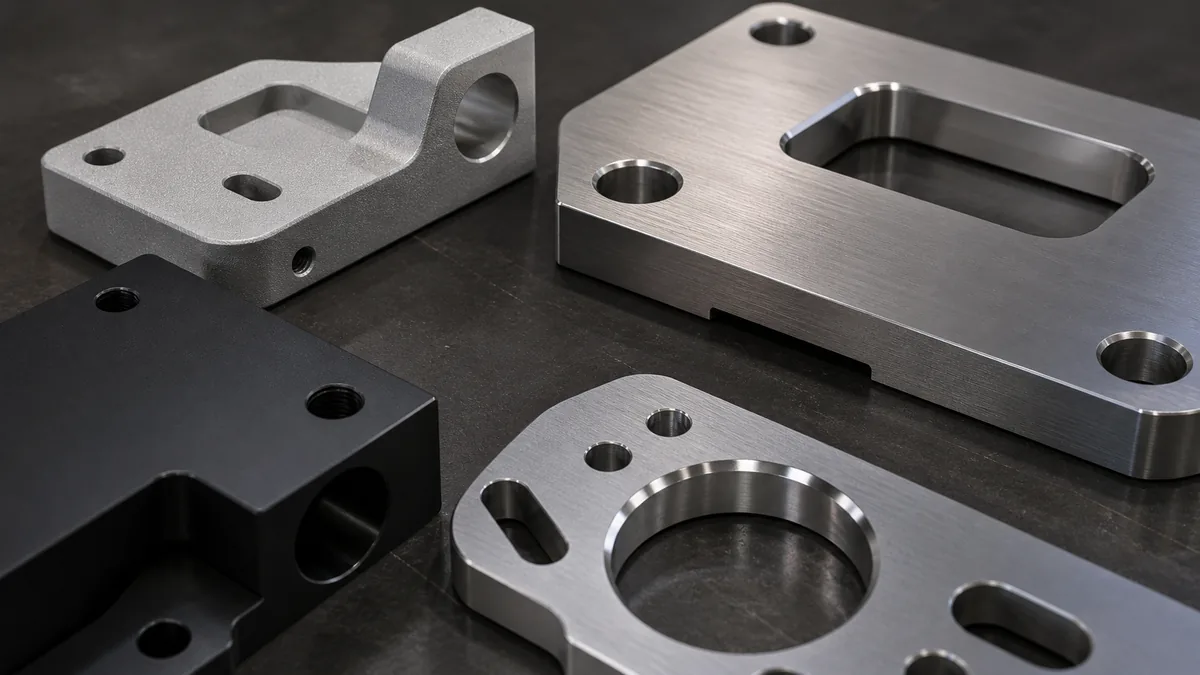
| Metal part that needs a uniform matte look | Bead blasting, sometimes followed by anodizing or passivation | Blasting can soften sharp edges and change cosmetic texture. Define critical edges and surfaces that must not be blasted. |
| Steel part exposed to handling or mild corrosion risk | Black oxide, phosphate, plating, paint, or powder coating depending on service conditions | Some finishes are thin and cosmetic; others add thickness. Confirm corrosion expectations and post-finish dimensions. |
| Part with high cosmetic durability needs | Powder coating or suitable plating system | Coating thickness may interfere with slots, holes, and mating features. Masking instructions are required. |
| Part with wear or low-friction concerns | Hard anodizing, electroless nickel, or other engineered coatings where appropriate | Ask how coating thickness is controlled and inspected on functional surfaces. |
This matrix does not replace material-specific review. It gives the buyer a way to ask better questions before a finish is added as a vague line item.
Check How the Finish Affects Dimensions
Surface finishes can change part dimensions, edge condition, and thread fit. The risk is highest when finishing is applied after tight-tolerance machining, especially on bores, grooves, mating faces, tapped holes, and press-fit features.
Anodizing and plating can add measurable thickness. Powder coating is much thicker than most conversion or plating finishes. Bead blasting does not add a coating, but it can alter surface texture and round fine edges. Polishing may remove material unevenly if the geometry is difficult to access. These effects are not always a problem, but they must be planned before the supplier cuts metal.
If the finished dimension matters, state whether the drawing tolerance applies before or after finishing. For precision holes, bearing seats, sliding fits, and sealing faces, ask whether the feature should be machined oversize or masked. For threads, specify whether they should be chased after finishing, masked during finishing, or inspected with the correct gauge after finishing.
For broader tolerance planning, CNCMAVEN’s article on ISO 2768 and CNC machining tolerances is a useful companion because finish decisions often expose tolerance assumptions that were not visible in the CAD model.
Specify Masking Instead of Hoping the Supplier Infers It
Masking is where many finish problems start. A supplier may know that certain surfaces look critical, but they cannot reliably infer every functional area from a STEP file. If the RFQ does not identify masked surfaces, the supplier may price the job too low, finish surfaces that should remain bare, or delay production to ask questions later.
- Mark threaded holes that must remain clean and gaugeable.
- Identify electrical contact surfaces that should not receive insulating coatings.
- Call out sealing faces, O-ring grooves, and bearing surfaces that need a defined finish or no coating.
- State whether cosmetic faces must be free of rack marks or handling marks.
- Define acceptable locations for hanging, fixturing, or contact marks when the finish requires it.
Masking instructions belong in the drawing and RFQ notes, not only in an email thread. If a supplier has to quote finishing without these details, the price may not reflect the real production process.
Match Finish Choice to Material and Geometry
Not every finish works equally well on every alloy, geometry, or surface condition. Aluminum alloys respond differently to anodizing. Stainless steel often uses passivation or electropolishing rather than paint when corrosion resistance and cleanability are the main concerns. Carbon steel may need coating or plating because bare steel can rust quickly during shipping and storage.
Geometry also matters. Deep pockets, blind holes, sharp internal corners, and thin ribs can create uneven finish coverage or difficult masking. Large cosmetic panels can show tool marks, color variation, or handling scratches more easily than small brackets. If appearance is important, request a surface finish sample, boundary sample, or first article review before approving a full production batch.
For specific finishing routes, CNCMAVEN has separate guides on bead blasting for CNC machined parts, powder coating CNC machined parts, and electroless nickel plating for CNC parts. Use those deeper references once the general direction is clear.
Include Finish Requirements in the RFQ Package
A clear RFQ reduces price gaps between suppliers because each shop is quoting the same finish scope. Add a finish checklist to the drawing package when the part is not simply as-machined.
| RFQ item | Why it matters |
|---|---|
| Base material and alloy | Finish appearance and corrosion behavior depend on the substrate. |
| Finish name and target | State the process direction plus the function, such as cosmetic black anodize or corrosion-resistant passivation. |
| Surfaces to finish | Prevents unnecessary finishing cost and protects functional areas. |
| Surfaces to mask | Controls thread fit, electrical contact, sealing, and bearing surfaces. |
| Post-finish inspection | Defines whether dimensions, appearance, color, and coating condition are checked after finishing. |
| Packaging requirement | Protects cosmetic surfaces from rubbing, rack marks, and transit damage. |
If your RFQ package also includes CAD files and drawings, review how to prepare a CNC machining quote package before sending the request. Finish requirements are easier to price when they are tied to the drawing, not treated as a late purchasing note.
Watch for Common Finish Defects Before Production Approval
Finish defects are easier to prevent than to dispute after delivery. Use first article parts, sample coupons, or photos when cosmetic or coating quality matters.
| Problem | Common cause | Prevention step |
|---|---|---|
| Uneven color | Mixed alloy batches, inconsistent surface preparation, complex geometry | Keep material consistent and approve appearance standards before volume production. |
| Coating in threads | Missing masking instruction | Call out masked threads or post-finish thread inspection. |
| Visible tool marks under finish | Finish chosen to hide machining marks that are too deep | Define pre-finish surface requirement and review cosmetic faces. |
| Poor fit after coating | Thickness not included in tolerance planning | State whether tolerances apply after finishing and identify critical fits. |
| Transit scratches | Insufficient packaging for cosmetic parts | Specify protective packaging for finished surfaces. |
Final Buying Advice
Choose CNC surface finishes by service condition, geometry, and inspection requirement first; appearance should come after those constraints are understood. A strong finish specification names the process, defines finish zones, protects functional surfaces, and states how the finished part will be inspected. That gives the supplier enough information to quote accurately and gives the buyer a clearer standard for acceptance.
Should CNC tolerances apply before or after finishing?
For functional features, state this explicitly on the drawing. If coating or anodizing changes a critical bore, thread, slot, or mating face, the finished dimension usually needs inspection after finishing or the feature needs masking.
Is bead blasting enough for corrosion resistance?
Bead blasting mainly changes texture and appearance. It can be combined with anodizing, passivation, or another protective finish, but blasting alone should not be treated as a corrosion-control specification.
What should buyers send with a finish RFQ?
Send the alloy, CAD model, drawing, finish name, surfaces to finish, masked areas, cosmetic requirements, post-finish inspection needs, and packaging expectations.