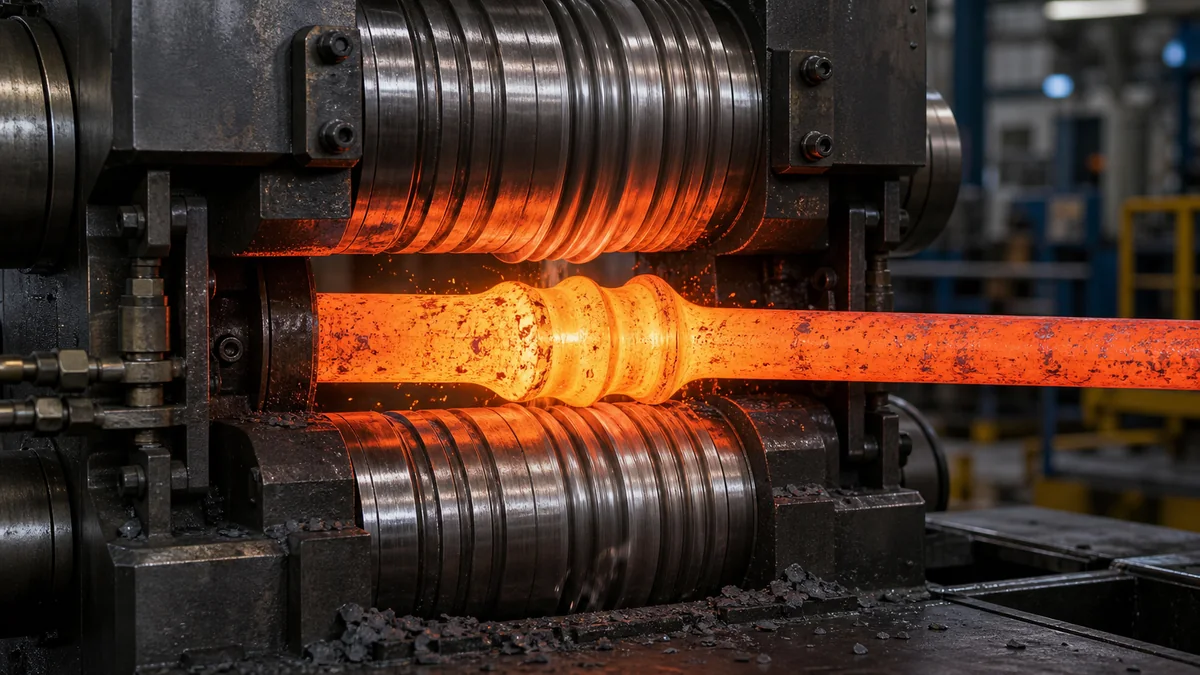
Roll forging is a metal forming process that reduces and shapes heated stock as it passes through grooved rolls. It is often used to make long parts or preforms that later move into forging, machining, or additional forming operations.
Compared with fully machining a long blank from bar stock, roll forging can improve material use and create a more suitable starting shape before precision work begins.
What roll forging does
Roll forging feeds heated metal through rotating rolls with shaped grooves. As the stock passes through the roll gap, its cross-section changes and material is redistributed along the length.
When roll forging is worth considering
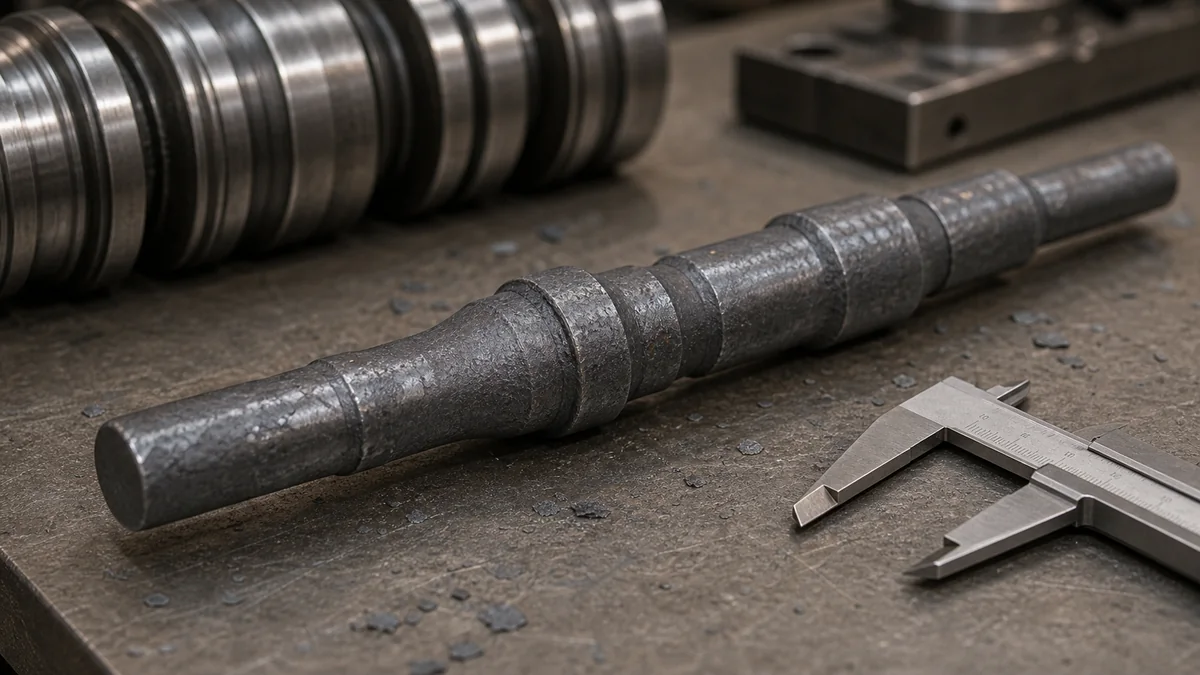
Roll forging is useful when a part is long, tapered, stepped, or needs a preform before another forging stage. It can reduce waste and help align material flow with the final shape.
| Use case | Why roll forging helps | Design caution |
|---|---|---|
| Long shafts or bars | Shapes stock before machining. | Final tolerance still needs finishing. |
| Preforms | Moves material closer to final distribution. | Roll groove design affects downstream forging. |
| Tapered sections | Can reduce stock gradually. | Avoid unrealistic sharp transitions. |
| Material savings | Less removal than machining from oversized bar. | Setup must match production volume. |
Design and sourcing notes
- Define the final machined envelope and the forged preform envelope separately.
- Plan enough stock for cleanup machining.
- Check whether roll forging is a preform step or the main forming step.
- Review grain flow, heat treatment, and straightness requirements.
FAQ
Is roll forging the same as rolling?
No. Roll forging uses shaped grooves to form specific part sections, while general rolling usually reduces stock thickness or changes standard profiles.
What parts use roll forging?
Long shafts, tapered bars, preforms, tools, and stepped metal blanks can use roll forging when material flow and stock efficiency matter.
Does roll forging remove the need for machining?
Usually not. It can reduce machining stock and waste, but final precision dimensions often still need CNC machining.
Conclusion
Roll forging is not a universal replacement for CNC machining or closed die forging. It is most valuable when it creates an efficient preform for long or stepped metal parts before final processing.