Engineering plastics can be excellent CNC machining materials, but they do not behave like metals. A plastic part may move during clamping, absorb moisture, creep under load, or burr differently from aluminum or steel. Buyers should choose the plastic grade before tightening tolerances, because the material often decides what is practical to machine and inspect.
Match the plastic to the job, not the name
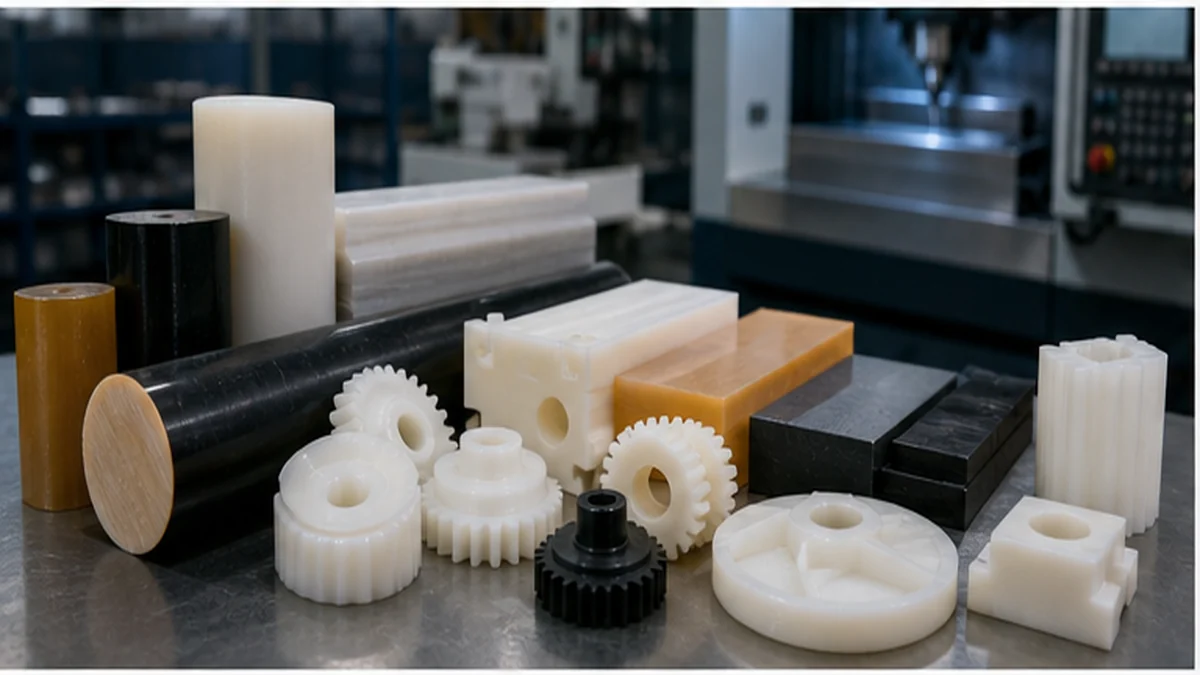
The right engineering plastic is the one that fits the part’s load, environment, temperature, friction, and inspection needs. POM or acetal is often considered for low-friction precision components. Nylon can work for wear parts but may absorb moisture. PTFE provides low friction and chemical resistance but can be difficult to hold tightly. PEEK is useful in demanding environments, but cost and machining difficulty should be justified by the application.
| Plastic family | Useful when the part needs | Buyer risk to check |
|---|---|---|
| POM / acetal | Good machinability, dimensional stability, low friction, gears, bushings, and fixtures. | Confirm temperature and chemical exposure before choosing it as a default. |
| Nylon | Wear resistance, toughness, and lower weight than metal. | Moisture absorption can affect dimensions and fit. |
| PTFE | Very low friction, chemical resistance, and non-stick behavior. | Softness and movement can make tight tolerances harder. |
| PEEK | Higher temperature capability, strength, and chemical resistance. | Material cost and machining time can be significant. |
| UHMW / PE | Impact resistance and sliding surfaces. | Thin features and fine details may be less stable. |
Tolerance risk starts with clamping and movement
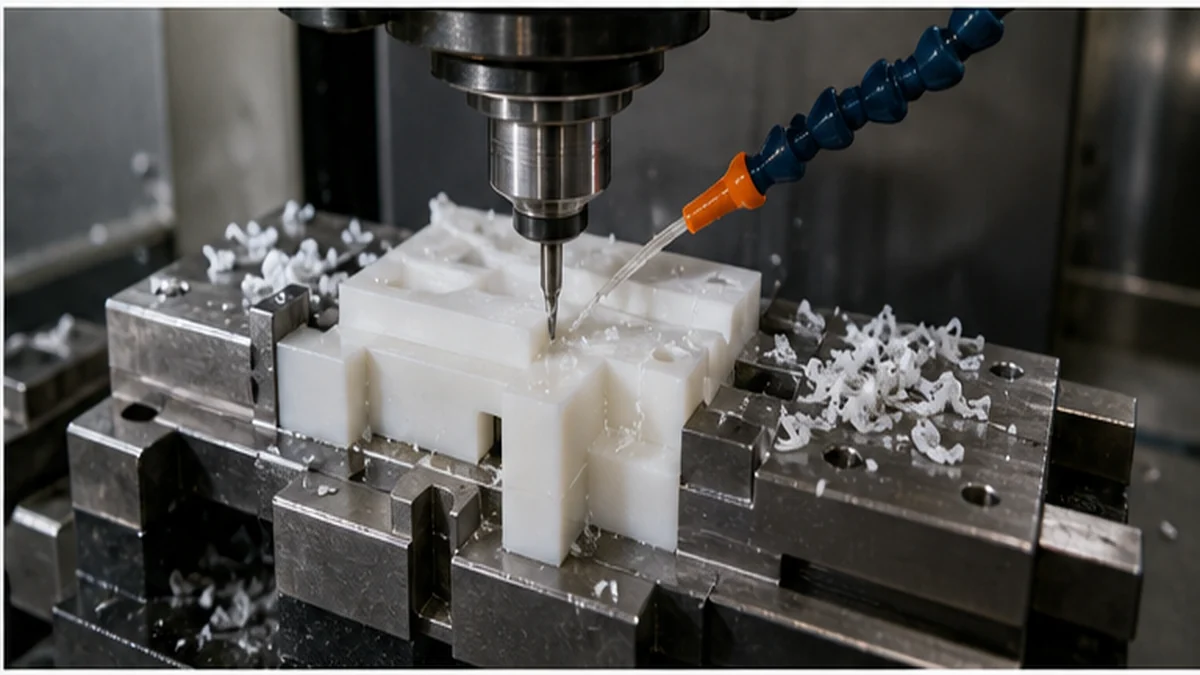
Plastic workpieces can deflect under vise pressure, especially when the part has thin walls, long spans, or pockets. A feature may measure correctly while clamped and shift after release. Sharp tools, stable fixturing, controlled step-downs, and realistic tolerance notes matter more than simply asking for metal-like precision. When a buyer needs tight plastic parts, the drawing should identify critical features rather than applying strict tolerances everywhere.
Design choices that help plastic parts machine cleanly
- Use generous radii where possible to reduce stress and tool marks.
- Avoid very thin walls unless the function requires them.
- Separate cosmetic surfaces from functional bearing or sealing surfaces.
- Define whether burrs, fuzzing, or edge rollover are acceptable.
- Ask whether the supplier will machine from sheet, plate, rod, or molded stock.
Use a material decision matrix before quoting
| Requirement | Good RFQ question | Why it matters |
|---|---|---|
| Moisture exposure | Will the part operate in a humid or wet environment? | Some plastics change dimension or properties after moisture absorption. |
| Sliding or wear | Is the part a bearing, guide, gear, or contact surface? | Friction and wear behavior can matter more than tensile strength. |
| Temperature | Will the part see heat during use, cleaning, or assembly? | Heat can affect creep, stiffness, and dimensional stability. |
| Electrical needs | Does the part need insulation or controlled conductivity? | Plastic grade and fillers can change electrical behavior. |
| Inspection | Which dimensions are functional after unclamping? | The inspection method should match how the part is used. |
How to specify engineering plastics in an RFQ
Send the exact grade when it matters, not only a family name such as “nylon” or “plastic.” Include the CAD model, drawing, quantity, critical dimensions, finish expectations, burr requirements, and the part’s operating environment. If equivalents are acceptable, list them clearly. If they are not acceptable, state that substitution requires approval.
Common plastic machining problems to prevent early
Plastic CNC parts often fail for reasons that do not appear in the CAD model. A thin wall may flex during machining, a flat plate may bow after material is removed, or a drilled hole may develop a fuzzy edge that affects assembly. These problems are easier to prevent when the buyer identifies functional surfaces and edge requirements before machining starts. A note such as “deburr all edges” may be too vague if one edge is a sealing face and another is only cosmetic.
Moisture, temperature, and storage condition can also change the result. Nylon parts, for example, may behave differently after exposure to humidity. Some plastics expand more than metals, so mixed metal-and-plastic assemblies should be reviewed for clearance, fastener load, and operating temperature. When the part is used as a fixture, bearing, guide, or insulating component, the RFQ should explain how the part is loaded and measured in the final assembly.
Inspection should match how plastic parts are used
Inspection for machined plastic parts should focus on the dimensions that control fit after the part is unclamped and stabilized. For flatness, hole position, and thin features, ask how the supplier plans to fixture the part for measurement. If cosmetic appearance matters, separate machining marks, scratches, burrs, and color variation from dimensional requirements so approval is not based on a vague visual standard.
For repeat orders, ask whether the supplier will use the same stock form and machining setup. Switching from rod to plate, or changing fixture strategy, can alter grain direction, flatness, and cosmetic surfaces even when the material name remains the same.
FAQ
What is the easiest engineering plastic to CNC machine?
There is no universal easiest choice, but acetal/POM is often selected for stable, low-friction machined parts. The final choice depends on load, environment, tolerance, and cost.
Why are tight tolerances harder on plastic parts?
Plastics can deflect during clamping, move after machining, absorb moisture, or creep under load, so tolerance strategy must match the material behavior.
Should I send a drawing for machined plastic parts?
Yes. The model defines geometry, but the drawing should identify critical dimensions, tolerances, burr limits, surface requirements, and material grade.
Conclusion
Engineering plastics work best when material behavior is part of the design decision. Choose the grade first, define the real functional dimensions, and give the supplier enough context to control clamping, burrs, finish, and inspection.