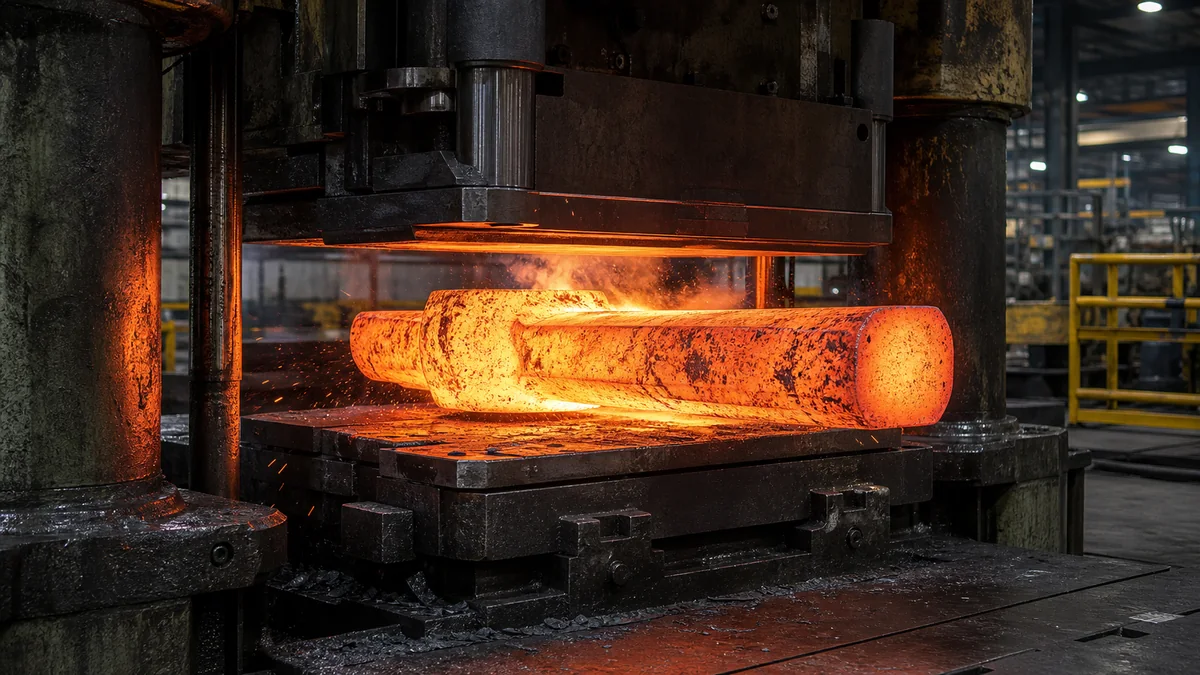
Open die forging is often considered when a metal part is too large, too low-volume, or too flexible in geometry to justify a dedicated closed die. The process uses heat, pressure, and relatively simple tooling to refine grain flow and shape the workpiece step by step.
For engineering teams, the key question is whether open die forging should create the rough forged blank, while CNC machining finishes critical faces, bores, threads, and datums.
What open die forging does
Open die forging compresses heated metal between flat or simple shaped dies without fully enclosing the workpiece. The operator or automation repositions the billet through multiple strikes or press strokes until the desired rough geometry is achieved.
When open die forging is a good fit
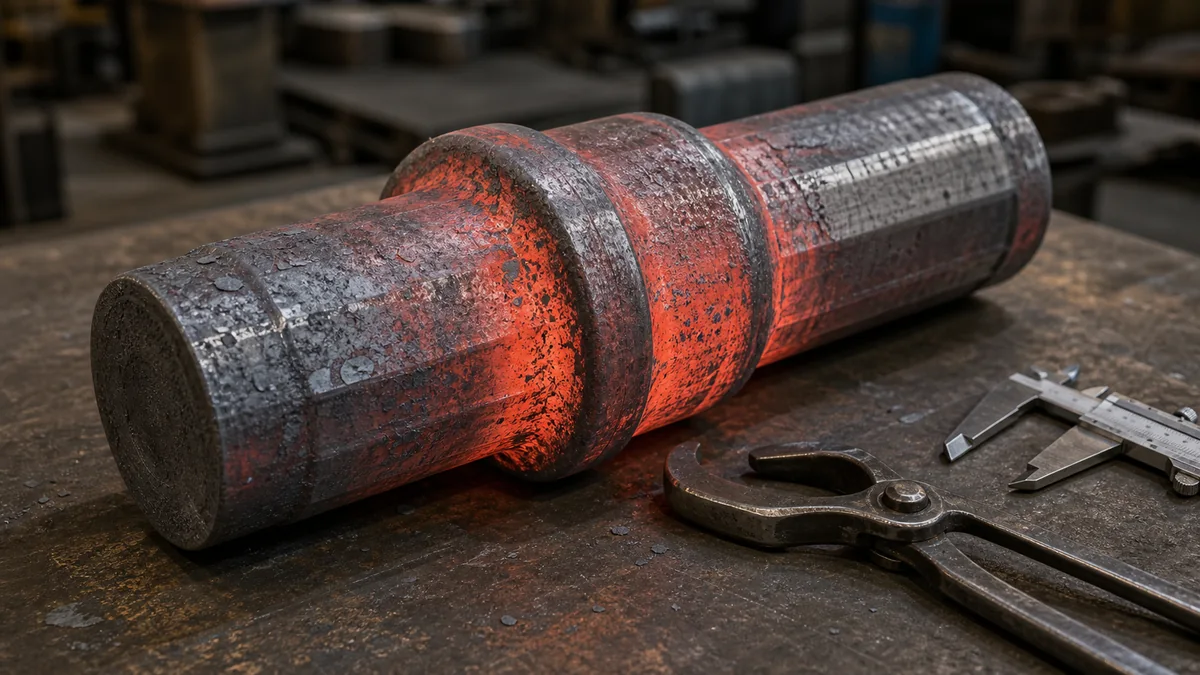
Open die forging is useful for shafts, rings, discs, blocks, cylinders, and other heavy components where strength and material integrity matter more than near-net detail.
| Project factor | Open die forging advantage | Watch point |
|---|---|---|
| Part size | Handles large sections better than many closed-die routes. | Machining allowance must be planned. |
| Tooling | Uses simpler tooling than impression dies. | Less near-net detail. |
| Volume | Can fit low to medium volumes. | Unit cost may remain higher than closed die at scale. |
| Mechanical properties | Can improve grain flow and toughness. | Heat treatment and inspection still matter. |
Design notes for CNC-finished forgings
- Add machining stock on critical surfaces.
- Define forged grain direction where strength is important.
- Separate rough forged tolerances from finished CNC tolerances.
- Plan inspection datums after forging, heat treatment, and machining.
FAQ
Is open die forging the same as closed die forging?
No. Open die forging does not fully enclose the part in a shaped cavity, while closed die forging uses impression tooling to form more detailed geometry.
Does open die forging still need CNC machining?
Often yes. Open die forging creates a strong rough blank, and CNC machining is commonly used for final dimensions, holes, faces, and tight tolerance features.
What parts are suited to open die forging?
Large shafts, rings, discs, cylinders, blocks, and heavy-duty blanks are common candidates when strength and low tooling flexibility matter.
Conclusion
Open die forging is strongest when large metal blanks need strength and flexibility before final machining. It works best when forging requirements and CNC finishing requirements are planned together.