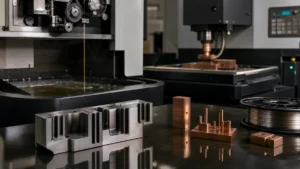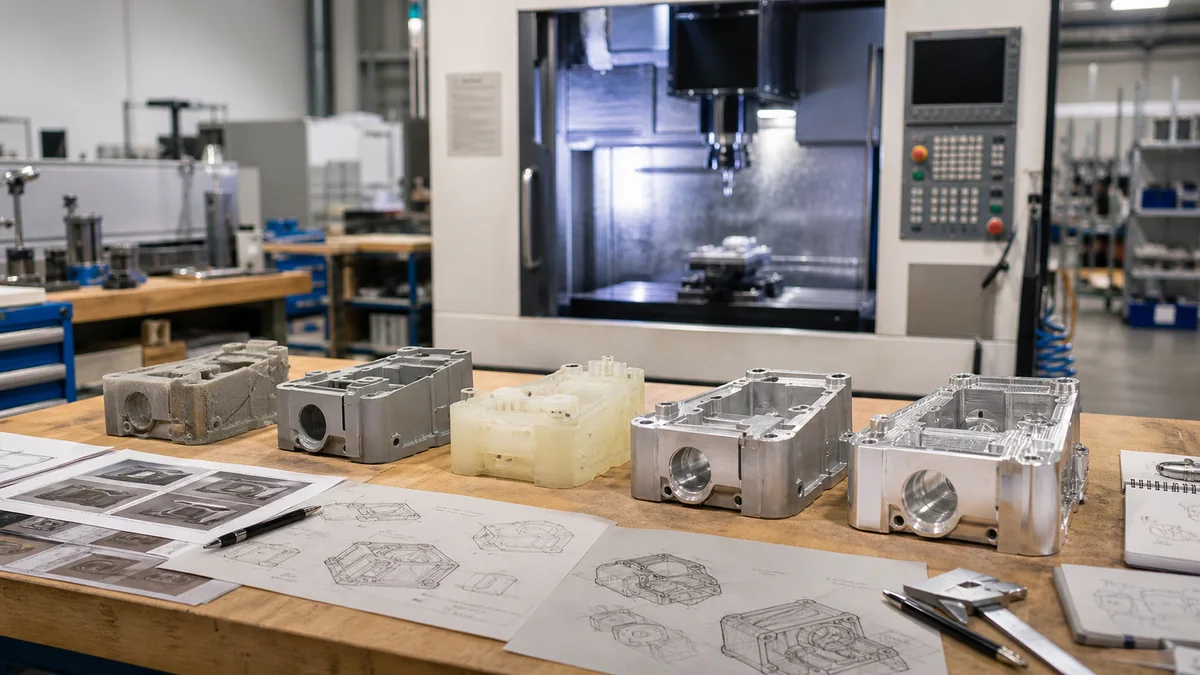
CNC machining is useful in product development because it gives engineers real materials, tight interfaces, and functional parts without committing to production tooling. It can support early fit checks, engineering validation, investor demos, bridge production, and final design verification.
The mistake is treating every prototype as if it has the same goal. A first-fit prototype, a test fixture, and a production-intent machined component need different tolerances, materials, finishes, and inspection plans.
Use CNC prototypes for the right development question
Before ordering parts, define what the prototype must prove. If the goal is ergonomic shape, a printed model may be faster. If the goal is thread strength, heat transfer, sealing, bearing alignment, surface finish, or assembly stiffness, CNC machining is often more useful because it can use production-like metals and plastics.
| Development stage | Best CNC use | Do not over-specify |
|---|---|---|
| Concept check | Simple machined blocks, brackets, or interface parts for fit and layout. | Cosmetic finish, tight nonfunctional tolerances, or full inspection reports. |
| Engineering prototype | Functional material, critical dimensions, threads, bearing fits, and assembly datums. | Production surface treatment unless it affects performance. |
| Validation build | Repeatable parts for testing, fixture checks, and design freeze decisions. | Late geometry changes without revision control. |
| Bridge production | Low-volume machined parts while tooling or molded design is still being prepared. | Features that cannot scale to the intended production process. |
| Production support | Machined jigs, fixtures, inserts, gauges, and replacement components. | Loose documentation that prevents repeat orders. |
Decide what must match production
A CNC prototype can match production material, but it may not match production economics or process constraints. A machined aluminum housing may be perfect for testing electronics and assembly, yet the future die-cast or molded version will need different wall thickness, draft, ribs, bosses, and parting-line planning. A machined plastic part may prove fit and chemical resistance, but an injection molded part will behave differently around gates, ribs, knit lines, shrinkage, and texture.
Use CNC machining when the product team needs reliable geometry, strong threads, accurate datums, real material behavior, or a small batch for testing. Use it carefully when the final process is injection molding, die casting, stamping, or forging. In those cases, ask the CNC prototype to answer functional questions while still designing toward the future manufacturing process.
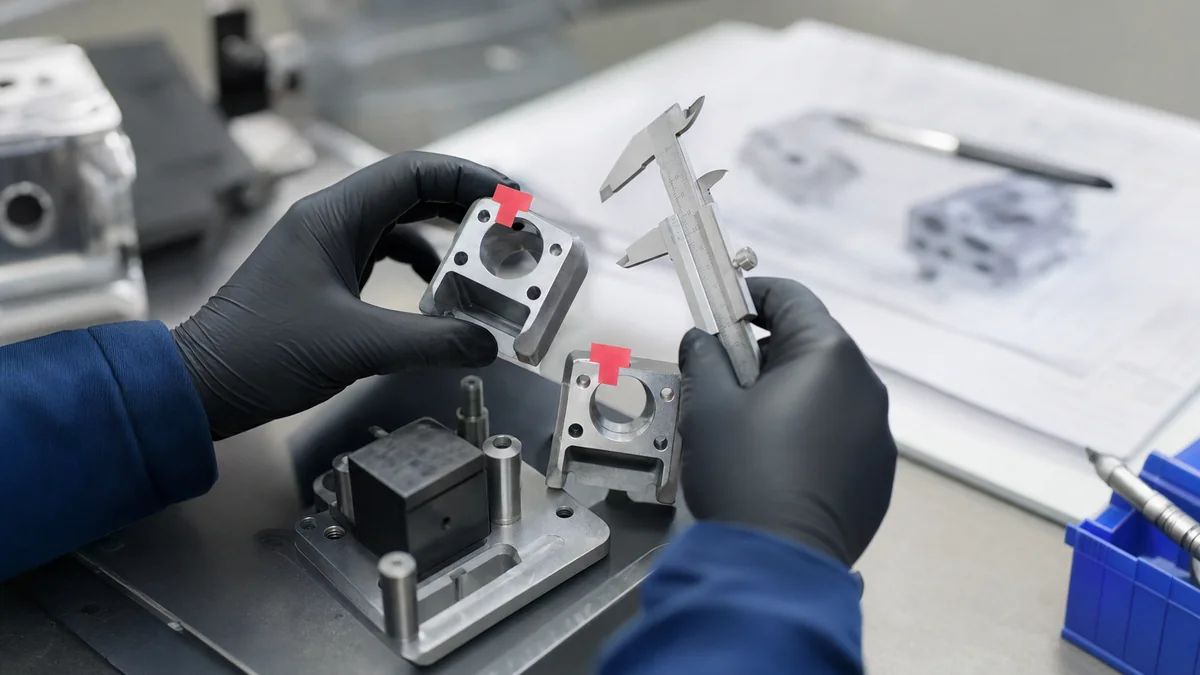
Turn prototype feedback into controlled revisions
Prototype work becomes expensive when changes are informal. If the team files a slot wider, changes a hole pattern, and swaps a screw size without updating the CAD model and drawing, the next CNC order can repeat the old mistake. Each build should record what changed, why it changed, and how the next part will be checked.
- Keep one controlled CAD revision for each prototype build.
- Record test failures against specific features, not just general comments.
- Separate design changes from manufacturing deviations.
- Update drawings when tolerances, threads, finish, or inspection criteria change.
- Keep photos and measurement results linked to the part revision.
Prototype risks that appear before production
| Risk | Why it appears | How to manage it |
|---|---|---|
| Prototype works but production process cannot make it | CNC can create geometry that molding, casting, or stamping cannot copy directly. | Review future process constraints before design freeze. |
| Cost target is missed | Prototype tolerances and finishes become permanent by accident. | Separate functional requirements from prototype preferences. |
| Assembly fit changes between builds | Revisions are not controlled or mating parts are missing from the RFQ. | Send assembly context and controlled drawings with each order. |
| Test results are unclear | The part changed in more than one important way at once. | Use smaller revision steps when validating critical features. |
| Supplier questions repeat | Material, finish, tolerances, and inspection needs are not documented. | Build an RFQ checklist and reuse it for each prototype round. |
When CNC machining should lead to another process
CNC machining can be the final process for low-volume, high-value, or precision products. It can also be a stepping stone to injection molding, sheet metal fabrication, forging, die casting, or extrusion. The transition should be planned early. If a part will eventually be molded, start adding draft, uniform wall sections, and realistic bosses before the last CNC prototype. If a part will be forged or cast, decide which faces will be machined after near-net forming.
CNCMAVEN can support early and repeat prototype builds through CNC machining services. If the project may move to tooling, compare with injection molding services and review CNC milling DFM before finalizing the prototype geometry.
How to brief the supplier at each prototype stage
A useful CNC prototype brief changes as the product matures. In early development, the supplier needs to know which dimensions are functional, which features are cosmetic, and which areas can be simplified to save cost. At this stage, fast feedback is usually more valuable than perfect surface finish, so the RFQ should separate must-have requirements from features that can be relaxed for learning.
Near production, the brief should become more controlled. Send the latest CAD file, drawing revision, material grade, surface finish, critical dimensions, assembly notes, and expected production process. If the CNC prototype is being used to validate a molded, cast, forged, or stamped design, call out which geometry may change later so the supplier does not optimize the prototype in a way that hides production risks.
FAQ
Is CNC machining good for product development?
Yes, when the team needs real materials, accurate interfaces, functional prototypes, or low-volume test parts. It is less useful for purely visual shape studies where simpler models may be faster.
Can a CNC prototype become a production part?
Yes, especially for low-volume or high-precision products. For high-volume plastic or metal parts, the design may need changes before moving to molding, casting, stamping, or forging.
How many prototype iterations should a product team expect?
There is no fixed number. Teams should iterate until critical fit, function, material, and assembly risks are resolved, while keeping each revision documented and measurable.