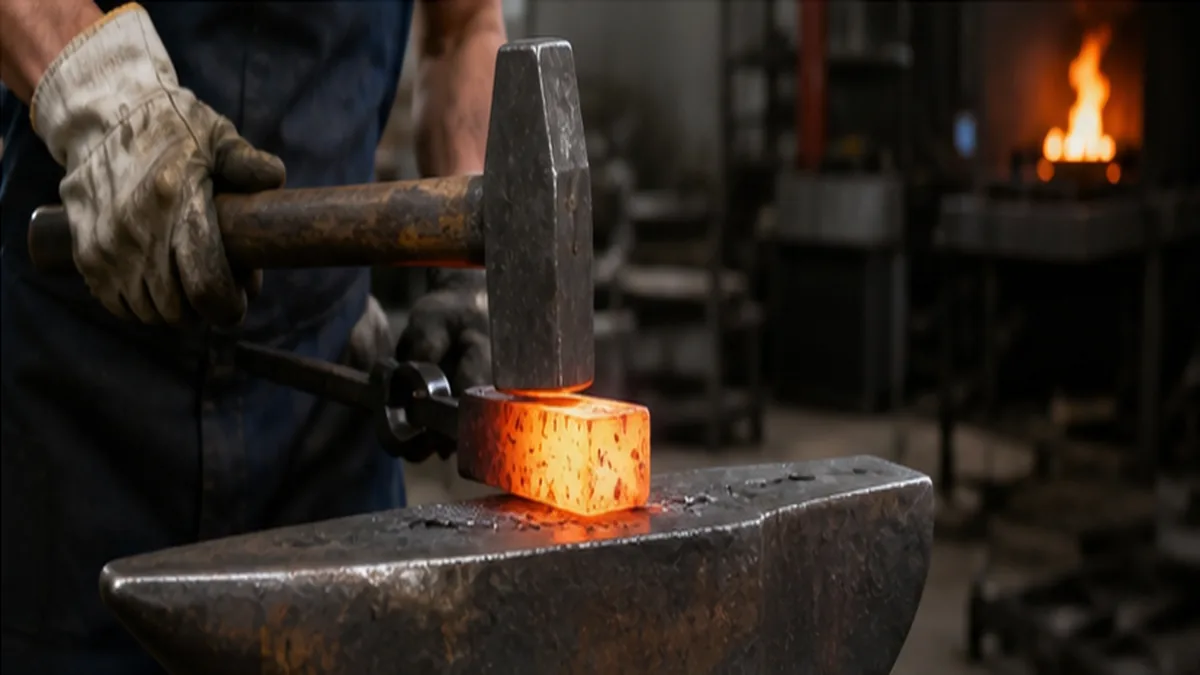
Smith forging is one of the oldest metal forming processes and it is still used today for custom parts, prototypes, repair work, and specialty tooling. Unlike high-volume industrial forging that relies on dedicated dies and automated hammers, smith forging depends on the skill of the smith to heat, shape, and finish each piece.
For engineers and buyers, smith forging should not be dismissed as an outdated craft. It solves real manufacturing problems when quantities are low, lead time is tight, or the part geometry does not justify the cost of die tooling.
What Smith Forging Is and What It Is Not
Smith forging shapes heated metal using a hammer, anvil, and hand-held or power-assisted tools. The smith controls heating, deformation sequence, and cooling directly. Each piece may be unique or produced in small batches with simple tooling. This is fundamentally different from closed-die industrial forging where metal is forced into a fixed die cavity under high controlled pressure.
The process is not designed for tight dimensional repeatability across thousands of parts. Smith forging is better understood as a flexible, low-tooling-cost route for one-off parts, small runs, heavy repair sections, or shapes that are impractical to die-forge.
Smith Forging vs. Industrial Forging: A Practical Comparison
| Factor | Smith forging | Industrial die forging |
|---|---|---|
| Tooling cost | Low; simple tooling or none. | High; dedicated dies must be designed and machined. |
| Setup time | Hours to days for simple tooling. | Weeks to months for die design, machining, and trial. |
| Volume fit | 1 to perhaps a few hundred pieces. | Hundreds to millions of pieces. |
| Dimensional repeatability | Depends on smith skill; expect some variation. | Good repeatability once dies and process are stable. |
| Material options | Steel, tool steel, stainless, aluminum, copper alloys, titanium. | Also broad, but die life and forgeability limit some alloys. |
| Shape complexity | Best for simpler geometries and local features. | Can produce complex net-shape or near-net-shape forms. |
| Grain flow control | Controlled by smith through working direction. | Controlled by die design and preform, often more repeatable. |
When Smith Forging Is the Right Manufacturing Choice
Smith forging is worth evaluating when at least two of these conditions apply:
- Very low volume: You need 1 to 20 pieces and die forging cannot be justified.
- Fast turnaround: Lead time must be days, not weeks or months.
- Prototype validation: You need functional forged prototypes before committing to die tooling.
- Heavy repair or modification: A large industrial part needs a forged repair section that cannot be cast or welded alone.
- Custom tooling: Specialty hammers, upsetting tools, flatters, fullers, or swages for a unique feature.
- Material exploration: Trying an unfamiliar alloy or cross-section before locking die design.
If you need thousands of consistent parts, industrial forging or CNC machining from bar stock is usually the better financial and quality decision.
What CNC Machining Adds After Smith Forging
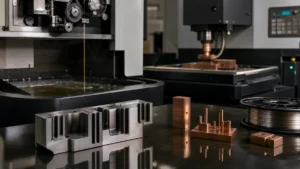
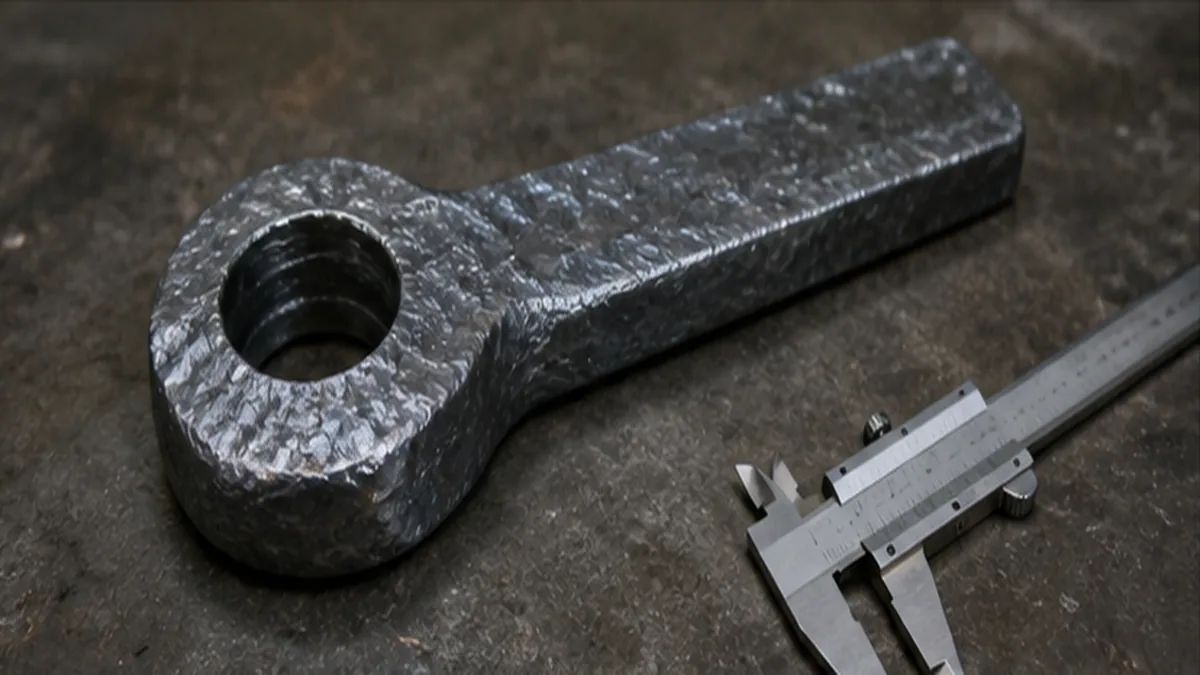
Smith forged parts almost always need secondary machining. The forged blank provides material efficiency, grain flow, and basic geometry, while CNC turning, milling, drilling, tapping, and grinding produce the precision surfaces.
A common pattern is: smith forge the rough shape near-net, normalise or heat treat, then CNC machine datums, bores, threads, sealing faces, and mounting features. This hybrid approach can reduce raw material cost and machining time compared to cutting everything from solid bar stock, especially for parts with large section changes.
Quality Factors to Control in Smith Forging
| Quality factor | Why it matters | What to check |
|---|---|---|
| Material grade and heat lot | Alloy composition and prior processing affect forgeability. | Mill certificate, material test report. |
| Forging temperature range | Working outside the recommended range can cause cracking, grain growth, or poor properties. | Temperature monitoring during work. |
| Reduction ratio and grain flow | Insufficient working may not refine grain structure. | Section etch or grain flow analysis if critical. |
| Surface condition | Scale, laps, folds, or cracks can hide under surface oxide. | Visual inspection, dye penetrant, or magnetic particle. |
| Machining allowance | Too little allowance risks leaving forging defects; too much wastes material and time. | Coordinate with CNC shop on cleanup stock. |
| Post-forge heat treatment | Normalising, annealing, or hardening must match the alloy. | Hardness testing, micro if required. |
How to Specify Smith Forging for a Project
- Provide the finished part drawing with tolerances and material specification.
- Mark which features must be forged near-net and which will be CNC machined.
- State the expected quantity, required delivery date, and certification needs.
- Clarify whether you need forged blanks, rough-machined blanks, or finished machined parts.
- Ask the smith or forging shop to confirm the starting stock size, forging steps, and machining allowance before work begins.
CNCMAVEN can help evaluate whether smith forging, industrial forging, casting, or CNC machining from solid is the best route for your part design and production plan.
Production Notes
For procurement teams, smith forging should be evaluated as a flexible blank-making method rather than a finished-part process. The drawing should still define machining datums, cleanup allowance, heat treatment, and inspection requirements so the forged shape can be finished reliably.
FAQ
What is smith forging used for today?
Smith forging is used for custom one-off parts, small-batch industrial components, heavy repair sections, prototype forgings, architectural metalwork, tooling, and specialty shapes where die forging is not justified.
Is smith forged steel as strong as die forged steel?
When performed correctly with proper temperature control and sufficient reduction, smith forged steel can achieve good mechanical properties. Die forging often provides more consistent grain flow and repeatability across production volumes.
Do smith forged parts need CNC machining?
Almost always yes. Smith forging provides the rough shape and material benefits, while CNC machining creates the precision bores, threads, faces, and tight-tolerance interfaces.
How much does smith forging cost compared to CNC machining from solid?
Cost depends on part size, material, shape complexity, and quantity. For large parts with significant section changes, smith forging plus finish machining can reduce material waste and total cost. For small, simple parts, CNC machining from bar stock is often more economical.
Conclusion
Smith forging is not obsolete. For the right combination of low volume, simple geometry, fast turnaround, and low tooling budget, it remains a practical manufacturing choice. The best results come when smith forging, heat treatment, inspection, and CNC finishing are planned together from the start.