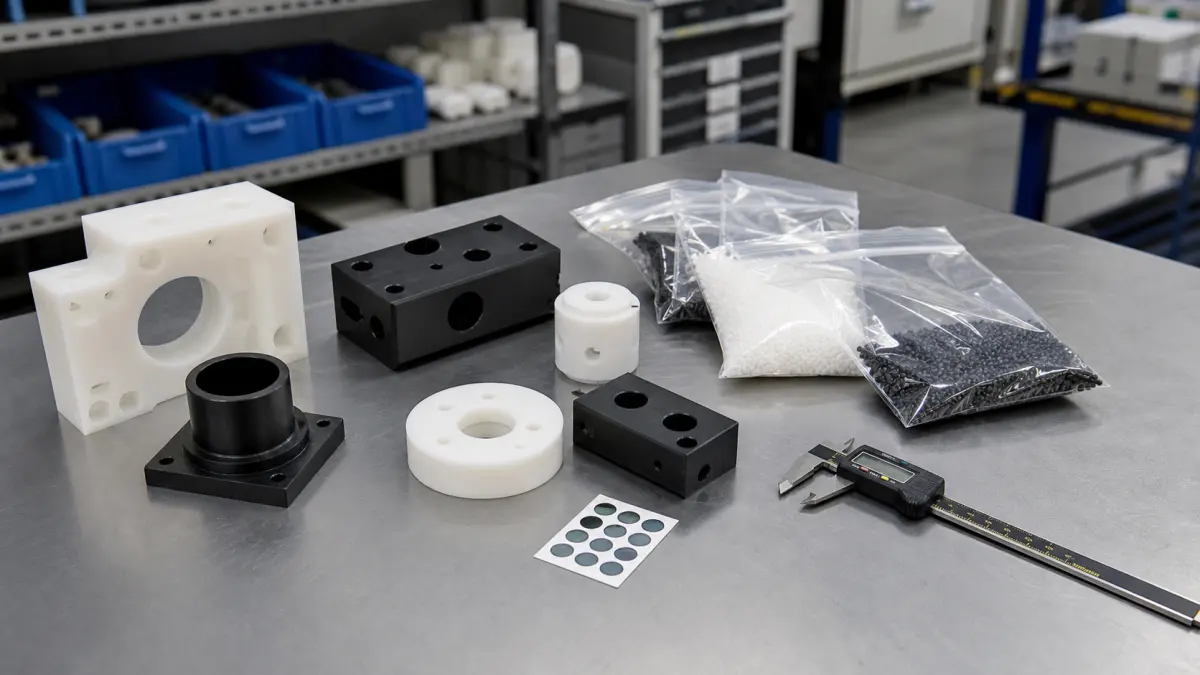
Some CNC plastic parts pass inspection at the machine shop and drift out of spec after storage, shipping, or assembly. Moisture absorption is one reason. It can change dimensions, stiffness, flatness, and fit, especially in materials such as nylon. Engineers and buyers should treat moisture exposure as a design and procurement variable, not as an afterthought after the parts arrive.
Moisture risk starts with the material, not the tolerance note
A tight tolerance does not solve moisture movement if the chosen plastic absorbs water in service. The first decision is whether the material is stable enough for the environment, geometry, and inspection requirement.
Engineering plastics do not respond to humidity in the same way. Acetal is often chosen for more stable machined components. Nylon can offer useful toughness and wear properties, but it is more sensitive to moisture uptake and dimensional change. PEEK, PTFE, HDPE, and other plastics each bring different tradeoffs in chemical resistance, temperature behavior, stiffness, machinability, and cost. The point is not that one material is universally better. The right choice depends on what the part must hold after it leaves the controlled inspection room.
For a spacer, bushing, wear pad, pump component, or fixture detail, ask where the part will live. Is it exposed to washdown, outdoor humidity, coolant, steam, packaging moisture, or long sea freight? Does it mate with metal hardware that will not move the same way? Does the part need a press fit, sliding fit, or sealing contact? These questions decide whether moisture absorption is a minor note or the main design risk.
Use a material selection table before tightening the drawing
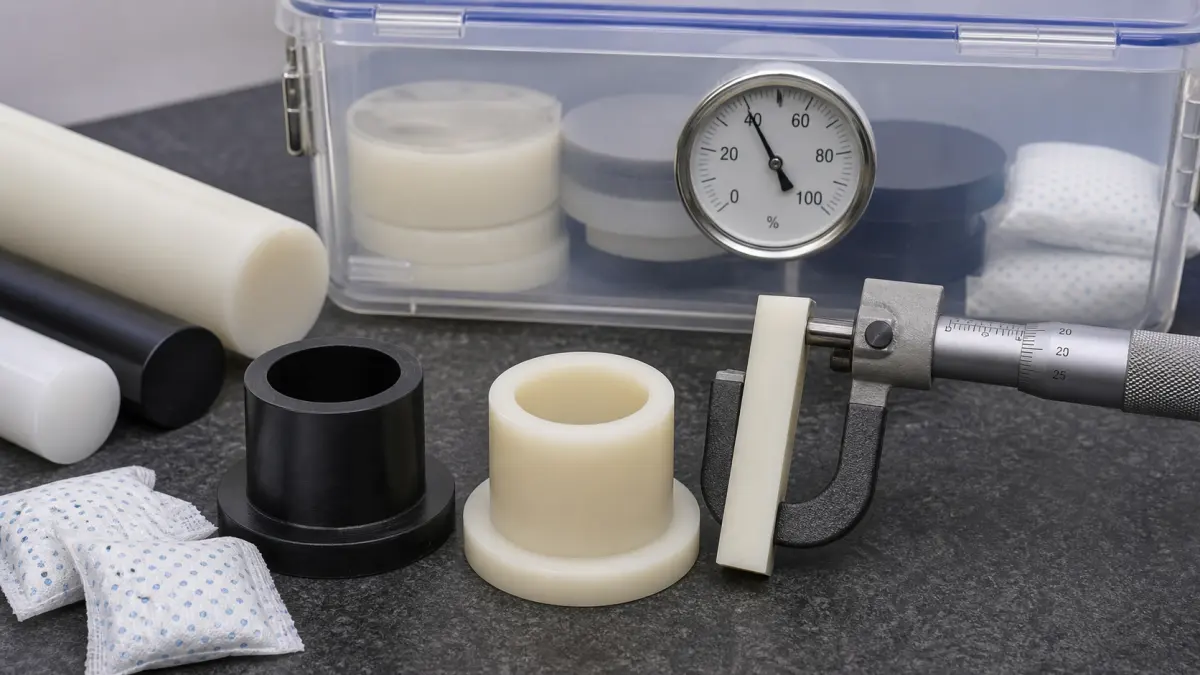
The most useful early review is a short material risk table. It helps the buyer and supplier decide whether the design needs a different plastic, a wider tolerance, or a different inspection condition.
| Part requirement | Moisture-related concern | Practical sourcing note |
|---|---|---|
| Sliding or rotating fit | Dimensional growth can increase friction or change clearance. | Define running clearance, mating material, lubrication, and service environment. |
| Press-fit insert or bearing | Moisture movement can loosen or overstress the fit. | Ask whether an insert, groove, or alternate retention method is safer than relying only on interference. |
| Flat plate or cover | Uneven moisture uptake and residual stress can create warp. | Review thickness balance, stock condition, and whether stress-relieving or fixture inspection is needed. |
| Washed or outdoor equipment | Service humidity may differ from inspection humidity. | Specify exposure conditions and avoid choosing material based only on dry-room dimensions. |
| Electrical or sensor housing | Moisture can affect fit, insulation choices, and long-term assembly stability. | Confirm dimensional and electrical requirements together; do not isolate material selection from the assembly. |
If the project is still early, compare this table with CNCMAVEN’s broader guide on engineering plastics for CNC machining. If HDPE is on the shortlist, the HDPE CNC machining design guide is useful for understanding why plastic behavior can drive geometry and fixturing choices.
Design features can amplify moisture movement
Geometry decides whether a small material change becomes a functional failure. Long thin sections, asymmetric pockets, large flat plates, and tight bores are more sensitive than chunky non-critical spacers.
Thin walls can move during machining and then continue to relax after moisture exposure. A plate with one heavily pocketed side may warp more than a balanced design. A precision bore near a thin edge may not stay round if the surrounding material absorbs moisture unevenly. Threaded plastic features can also change feel after storage, especially when the mating screw or insert is metal and does not move with the plastic.
Designers can reduce risk by balancing wall thickness, adding generous radii, avoiding unnecessary tight fits, and placing critical dimensions away from thin unsupported edges. When a plastic part must hold a close fit, define the measurement condition. A dry part measured immediately after machining is not the same as a conditioned part measured after time in the expected environment.
Inspection timing should match how the part will be used
Inspection is only meaningful when the measurement condition reflects the part’s real use. If the part will be assembled after overseas shipping, consider whether same-day inspection at the machine shop proves the right thing.
A buyer can specify simple controls without making the project complicated. Ask the supplier to record inspection timing, packaging condition, and material batch information for critical plastic parts. For moisture-sensitive parts, it may be useful to inspect a sample after a defined conditioning period or after sealed storage. Do not invent a conditioning requirement casually; align it with the actual service environment, the mating part, and the risk level.
| Inspection item | What to ask for | Why it helps |
|---|---|---|
| Critical bore or slot | Measured size, tool used, and timing after machining | Shows whether the reported dimension is immediate or stabilized. |
| Flatness or warp | Fixture condition and measurement support points | Prevents a flexible part from passing or failing because of inconsistent support. |
| Plastic stock identity | Material grade, color, and supplier or batch reference where available | Reduces confusion between similar-looking plastics. |
| Packaging | Sealed bag, desiccant when appropriate, and protection from heat | Controls exposure between inspection and delivery. |
RFQs should name the environment and the mating parts
A good RFQ tells the supplier what the plastic part must survive. The CAD model alone cannot show humidity, washdown, storage time, or whether a bore will run against a metal shaft.
- State the service environment: indoor dry use, outdoor use, coolant exposure, washdown, marine air, or high humidity storage.
- Identify mating components and whether the fit is sliding, press-fit, threaded, sealed, or cosmetic.
- Separate critical dimensions from non-critical dimensions so the supplier can focus inspection effort.
- Confirm whether dimensions should be checked immediately after machining or after a defined storage condition.
- Ask whether the selected plastic is suitable for the tolerance and environment before locking the purchase order.
- Specify packaging expectations for long-distance shipping if moisture movement is a known risk.
This does not replace detailed DFM review, but it makes the review possible. For complex parts, combine these notes with CNCMAVEN’s quote package checklist so drawings, models, material requirements, finishes, and inspection expectations agree.
Common failure symptoms point back to moisture or storage
When CNC plastic parts fail after delivery, the symptom can look like a machining error even when the root cause is material behavior or handling. A bore that tightens, a plate that bows, or a sliding part that starts binding may point to moisture, residual stress, or mismatched inspection conditions.
| Symptom | Possible cause | Prevention step |
|---|---|---|
| Part fits at first inspection but binds during assembly | Moisture uptake reduced clearance or changed roundness. | Review material choice, fit clearance, and measurement condition. |
| Flat cover arrives warped | Asymmetric machining, residual stress, or uneven storage exposure. | Balance geometry, review stock condition, and inspect supported flatness. |
| Threads feel inconsistent | Plastic movement, burrs, or insert mismatch. | Use thread gauges, define insert strategy, and protect parts during shipping. |
| Dimensions differ between supplier and receiving inspection | Different humidity, temperature, support, or timing. | Agree on inspection condition and critical dimension method before production. |
Conclusion
Moisture absorption matters because CNC plastic parts are often judged by how they fit after machining, packaging, shipping, and assembly, not only by how they measure at the spindle. Choose the material around the environment, design geometry that tolerates realistic movement, and make inspection timing part of the RFQ. Those steps are usually cheaper than arguing over a part that moved after it technically passed inspection.