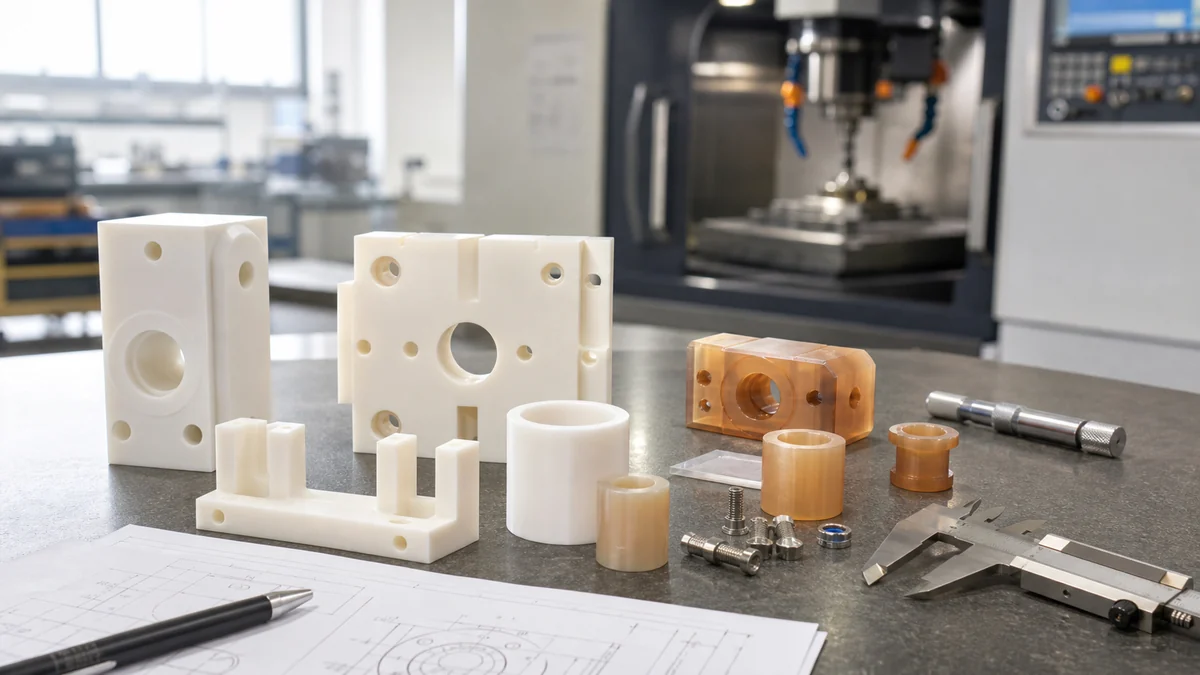
Electrical insulation parts are easy to under-specify because the CAD model only shows shape. It does not tell the CNC supplier whether the part must isolate voltage, survive heat, hold a threaded insert, resist moisture, or keep a spacer dimension stable after assembly. A small bushing, washer, guide plate, or standoff can fail because the material was chosen for “plastic” rather than for the actual electrical and mechanical job.
This guide explains how to choose CNC machined insulating materials and what to include in an RFQ before parts are made.
Start with the insulation function, not the plastic name
A machined insulator should be selected around the service condition. If the part only separates a low-voltage board from an aluminum housing, acetal, nylon, polycarbonate, or another engineering plastic may be enough. If the part sits near heat, chemicals, vacuum, repeated sliding, or high clamp load, the material choice becomes more specific. PEEK, PTFE, PEI, and other high-performance plastics can solve problems, but they also raise cost and may require tighter machining control.
| Requirement | What to ask before choosing material | Common sourcing risk |
|---|---|---|
| Electrical isolation | Voltage level, creepage/clearance needs, and whether the part is dry or exposed to contamination. | A mechanically suitable plastic may not be acceptable electrically without material confirmation. |
| Heat exposure | Continuous temperature, peak temperature, and whether the part carries load while hot. | Some plastics soften, creep, or move dimensionally under heat and clamp force. |
| Moisture or chemicals | Cleaning agents, humidity, oils, coolants, or outdoor exposure. | Moisture absorption can change dimensions or reduce long-term stability. |
| Mechanical fit | Press fit, threaded insert, bearing surface, spacer height, or assembly torque. | The insulator may crack, creep, or burr if the design treats it like metal. |
| Inspection need | Critical dimensions, flatness, hole position, and material documentation. | A model-only RFQ can miss the features that control electrical safety or assembly fit. |
Match common insulating materials to the real duty cycle
For many CNC machined insulating parts, the practical shortlist includes acetal/POM, PTFE, PEEK, nylon, polycarbonate, and PEI-type materials. The right option depends less on a single property and more on the combination of heat, friction, moisture, stiffness, cost, and machinability. For example, PTFE is useful where low friction and chemical resistance matter, but it is soft and can creep under load. PEEK is stronger and more temperature capable, but it is expensive and should be reserved for real performance needs. Acetal often machines cleanly and holds dimensions well for spacers, bushings, and small fixtures, but it may not fit every heat or electrical requirement.
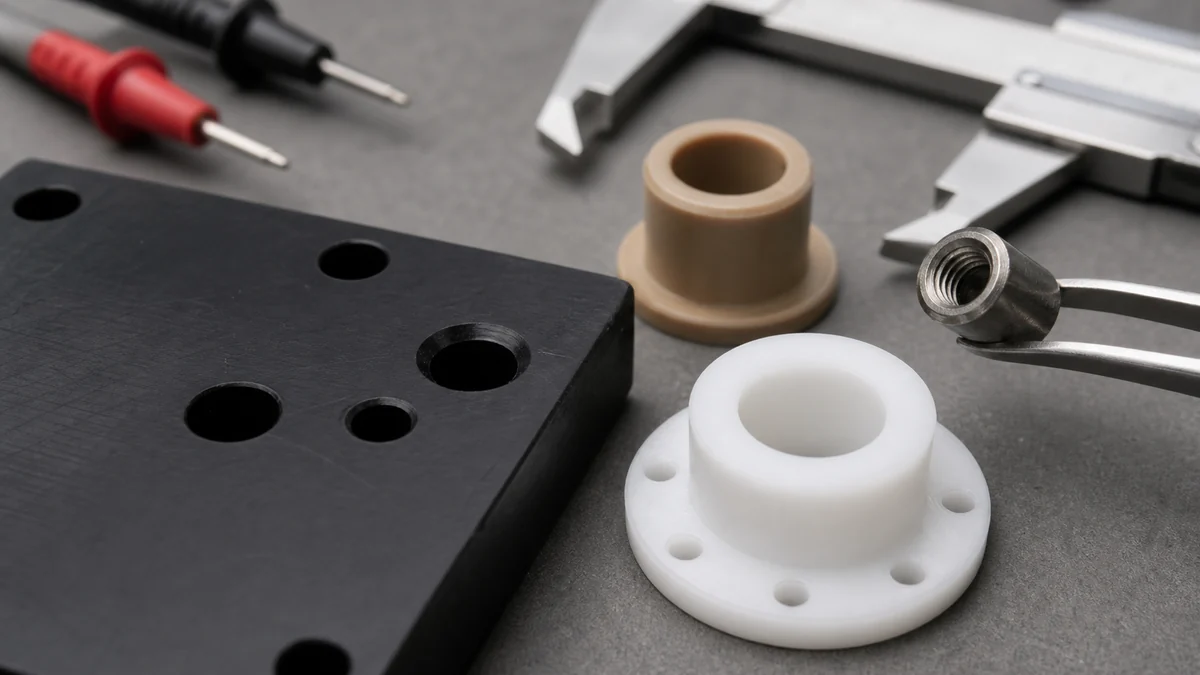
Ask the supplier to confirm stock availability and whether the requested grade can be certified. Color matters when parts are used in assemblies or inspection, but color should not override the grade and performance requirements.
Design details that keep insulating parts from failing in assembly
Insulating parts often fail at holes, inserts, edges, and thin walls rather than in the middle of the part. Plastic behaves differently from aluminum or steel during machining and assembly. A sharp internal corner may concentrate stress. A thread may strip if the engagement is too short. A press-fit insert may crack the boss if wall thickness is too light. A thin spacer may warp after machining if one side removes much more material than the other.
- Use generous corner radii where electrical function does not require a sharp edge.
- Keep thin walls and thin washers realistic; plastic stock can move during machining.
- Define insert type, installation method, and pull-out or torque expectation if inserts are required.
- Mark burr-sensitive edges, especially around electrical clearance paths and mating faces.
- Separate critical spacer height and hole position from cosmetic or nonfunctional dimensions.
RFQ checklist for CNC machined insulators
A good RFQ should let the supplier quote the part without guessing the electrical context. Send the STEP file, drawing, material grade, quantity, and revision. Add the operating temperature range, whether the part touches metal, whether it is used near current-carrying parts, and whether the assembly is washed, potted, sealed, or exposed outdoors.
| RFQ item | Why it matters | Example instruction |
|---|---|---|
| Material grade | Different grades of the same plastic family can behave differently. | Specify PEEK, PTFE, acetal/POM, nylon, or PEI grade where known; otherwise state required properties. |
| Critical dimensions | Spacer height, hole position, and slot width often control assembly. | Mark only functional dimensions tightly and use general tolerances elsewhere. |
| Edge condition | Burrs and sharp edges can affect electrical clearance and assembly safety. | Call out deburring and edges that must stay clean around conductive parts. |
| Insert or thread details | Plastic thread strength depends on engagement, wall thickness, and load. | State insert type, thread size, depth, and whether metal inserts are installed by supplier. |
| Inspection documents | Insulating parts may need traceability or dimensional reports. | Request material certificate, first article report, or selected dimension report if needed. |
Inspection should check fit and material, not only dimensions
Dimensional inspection is necessary, but it is not the only check. For insulating components, buyers should confirm the material received, inspect burrs around holes and slots, check flatness or spacer height where assembly load matters, and verify insert position if the supplier installs hardware. If electrical performance must be certified, define the test standard and acceptance criteria before quoting rather than after parts arrive.
CNCMAVEN can review plastic and metal components through its CNC machining services. For tolerance planning, compare the drawing with ISO 2768 CNC machining tolerance guidance and the CNC milling DFM checklist.
FAQ
What is the best CNC material for electrical insulation?
There is no single best material. The choice depends on voltage, temperature, moisture, mechanical load, chemical exposure, and cost. Acetal, PTFE, PEEK, nylon, polycarbonate, and PEI-type plastics can all be valid in different conditions.
Can CNC machined plastic parts hold threaded inserts?
Yes, but the insert type, wall thickness, installation method, and expected torque or pull-out load should be specified. Do not assume a metal insert can be added safely to any plastic boss.
Should insulating parts use tight tolerances?
Only functional dimensions should be tight. Over-tightening noncritical plastic dimensions can increase cost and distortion risk without improving electrical performance.