Overmolding can turn two materials into one functional part. Instead of adding a separate grip, gasket, color layer, seal, or protective cover after molding, the second material is molded onto a base substrate.
The payoff can be fewer fasteners, cleaner assembly, better ergonomics, and improved sealing. The risk is that poor material compatibility or weak mechanical design can lead to peeling, flash, cracking, or expensive tooling changes.
What overmolding means in practical terms
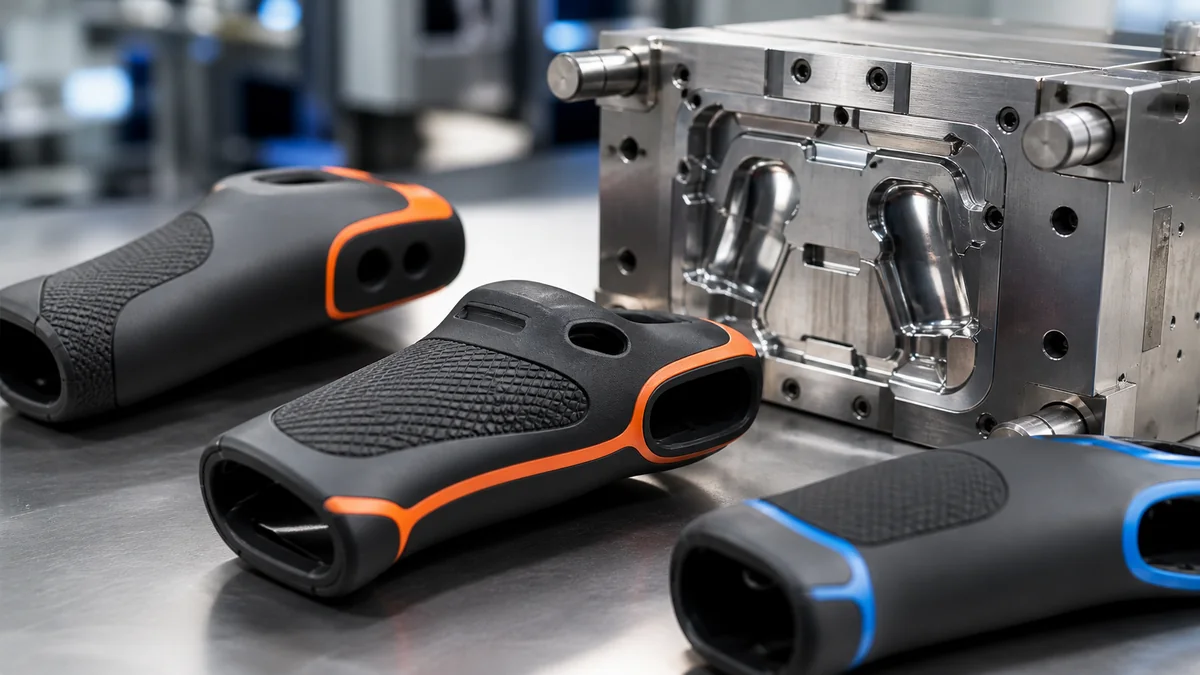
Overmolding is an injection molding method where one material is molded over another substrate. The substrate may be a rigid plastic part, metal insert, or previously molded component, while the overmold may add softness, color, protection, sealing, or grip.
When overmolding is worth considering
Overmolding is worth considering when the second material adds a function that would otherwise require separate assembly. Common goals include soft-touch grip, vibration damping, sealing, electrical insulation, impact protection, branding color, or hiding a joint line.
| Goal | Overmolding advantage | Risk to check |
|---|---|---|
| Grip or comfort | Soft-touch surface without a separate sleeve. | Peeling if bond or mechanical lock is weak. |
| Seal or gasket | Integrated seal reduces assembly steps. | Flash, compression set, or poor shutoff geometry. |
| Protection | Impact or edge protection molded onto the part. | Overmold thickness can increase cycle time. |
| Color or branding | Permanent molded color detail. | Tooling complexity and cosmetic rejects. |
Material compatibility comes first
The best overmolding designs start with compatible materials. Some combinations bond chemically, while others need mechanical interlocks such as holes, undercuts, texture, ribs, or dovetail-like features. If the materials do not bond well, the design should not rely on chemistry alone.
Design details that prevent failure
- Give the overmold somewhere to hold: Add mechanical locks when bonding is uncertain.
- Control edges: Shutoff surfaces must prevent flash and create clean transitions.
- Check heat resistance: The substrate must tolerate the second-shot melt temperature.
- Balance thickness: Thick overmold sections can slow cooling and create shrinkage stress.
- Prototype the feel: Hardness, texture, and grip are user-experience decisions, not only tooling decisions.
Overmolding vs insert molding vs two-shot molding
These terms overlap, but they are not always identical. Insert molding usually places a separate insert into the mold before plastic is injected. Two-shot molding uses a process that molds two materials in sequence, often in the same production system. Overmolding is the broader design goal of molding one material over another.
Questions to answer before tooling
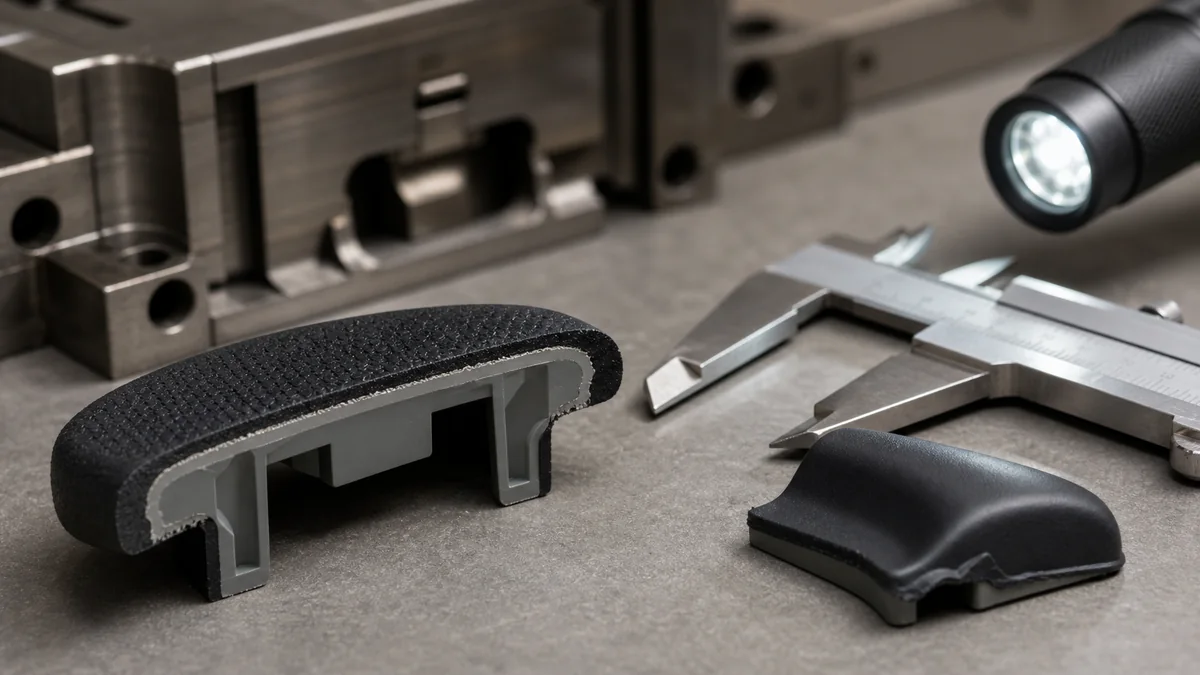
Before committing to tooling, define the substrate material, overmold material, target hardness, bond requirement, expected environment, cosmetic surfaces, tolerance interfaces, and production volume. If the overmolded part connects to CNC machined parts, check the mating datums and assembly loads early.
FAQ
Is overmolding stronger than adhesive assembly?
It can be stronger and more repeatable when the materials bond well or the design includes mechanical locking. Adhesive may still be better for low volume or material combinations that cannot tolerate molding heat.
What materials are used for overmolding?
Common combinations include rigid plastic substrates with TPE or TPU overmolds, and metal inserts with molded plastic or rubber-like materials. The exact pairing must be checked for bonding, heat resistance, and shrinkage behavior.
Does overmolding require expensive tooling?
Overmolding usually requires more tooling and process planning than a single-material molded part. It can still reduce total cost when it removes assembly labor, fasteners, secondary operations, or quality issues.
Conclusion
Overmolding is most useful when it removes assembly steps or adds a function that a single material cannot provide. It works best when material compatibility, mechanical locking, edge control, and production volume are considered before tooling starts.