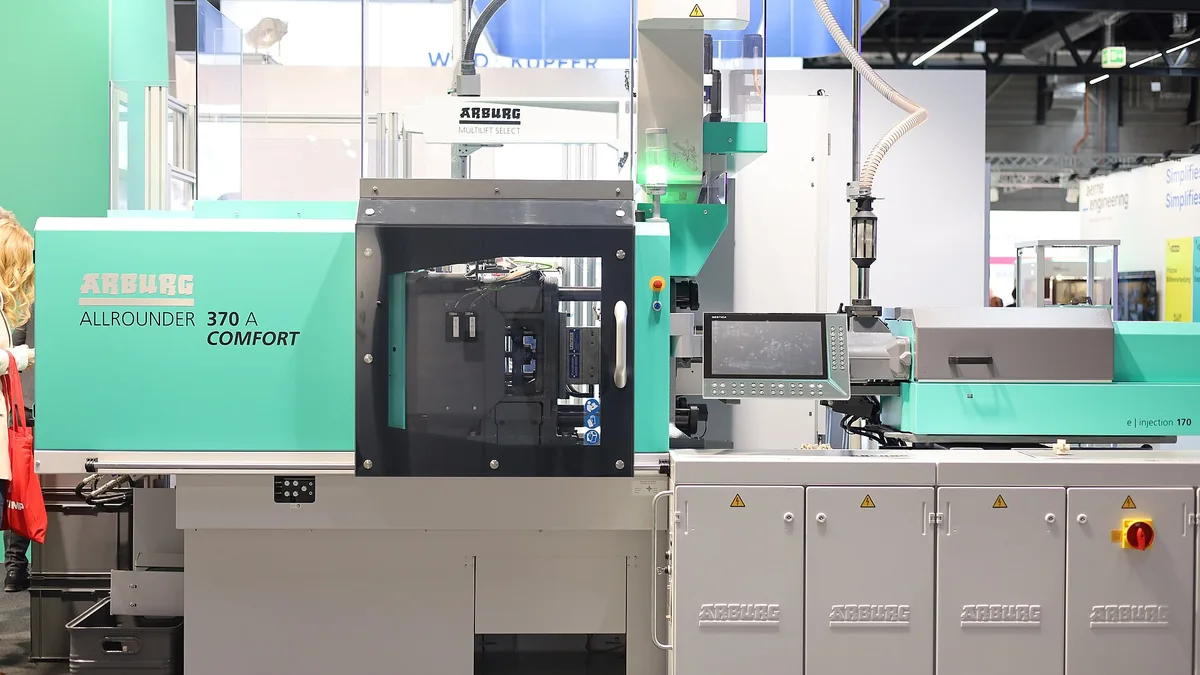
HDPE injection molding is useful for tough, lightweight, chemical-resistant plastic parts, but the material rewards good DFM discipline. If wall thickness, draft, ribs, gates, and cooling are not planned early, HDPE can show warpage, sink, flash, or inconsistent dimensions.
This guide focuses on what engineers and buyers should check before requesting a quote, especially when the part must move from prototype to production without repeated tooling changes.
Why HDPE behaves differently in injection molding
HDPE is a semi-crystalline thermoplastic, so it shrinks more than many amorphous plastics as it cools. That makes mold design, wall uniformity, cooling, and tolerance expectations especially important.
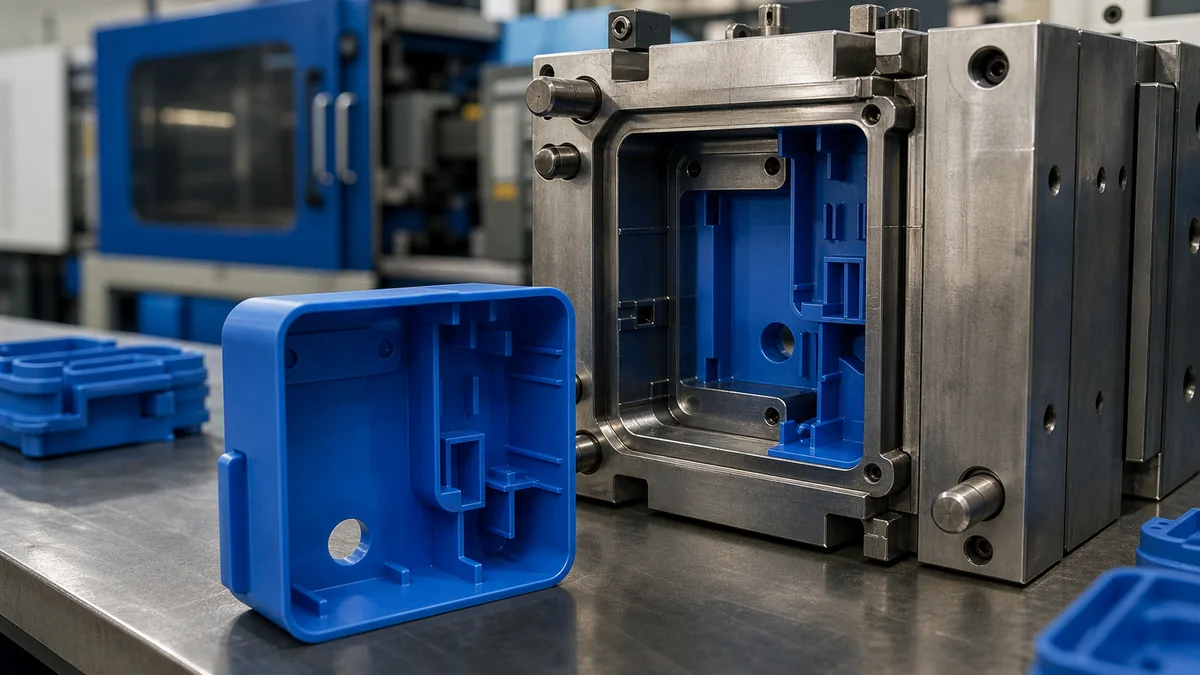
Use HDPE when the part needs toughness and chemical resistance
HDPE is often considered for housings, caps, containers, fixtures, fluid-handling parts, outdoor components, and wear-resistant plastic features. It has good impact resistance and chemical resistance, but it is not the best choice for every precision or high-temperature application.
| Requirement | HDPE fit | Design note |
|---|---|---|
| Chemical exposure | Often strong | Confirm the exact chemical, concentration, and temperature. |
| Impact toughness | Often strong | Avoid sharp internal corners that create stress risers. |
| Tight cosmetic surfaces | Moderate | Gate location and flow marks need early review. |
| High dimensional precision | Challenging | Shrinkage and warpage must be planned into tooling. |
DFM checklist for HDPE parts
- Keep walls consistent: Abrupt thickness changes increase cooling imbalance and warpage risk.
- Add draft: Draft helps ejection and reduces scuffing on vertical walls.
- Use ribs instead of thick blocks: Ribs improve stiffness without creating slow-cooling mass.
- Radius internal corners: Radii improve flow and reduce stress concentration.
- Plan gates around function: Avoid placing gates on sealing faces, visible cosmetic areas, or precision interfaces when possible.
Common defects to watch for
Common HDPE molding issues include warpage, sink marks, flash, short shots, flow marks, and dimensional drift. Many of these problems trace back to uneven wall sections, difficult flow paths, poor venting, or unrealistic tolerance expectations.
How to specify HDPE injection molding for a supplier
Provide the resin grade if known, expected annual volume, critical dimensions, cosmetic surfaces, operating temperature, chemical exposure, color requirements, and any assembly or sealing needs. If the part must mate with CNC machined metal components, define the inspection datums and fit requirements early.
FAQ
Is HDPE easy to injection mold?
HDPE is widely molded, but it requires attention to shrinkage, cooling, and wall uniformity. It is easy to process only when the part design supports stable flow and ejection.
What is HDPE injection molding used for?
It is often used for tough plastic parts such as caps, housings, containers, fittings, outdoor components, and chemical-resistant features.
Can HDPE hold tight tolerances?
HDPE can hold useful production tolerances, but it is not ideal for extremely tight dimensions without careful tooling, shrinkage planning, and inspection strategy.
Conclusion
HDPE injection molding works best when material behavior is considered before tooling begins. By controlling wall design, draft, gate location, ribs, and tolerance expectations, teams can reduce defects and make molded HDPE parts easier to quote, tool, and produce.